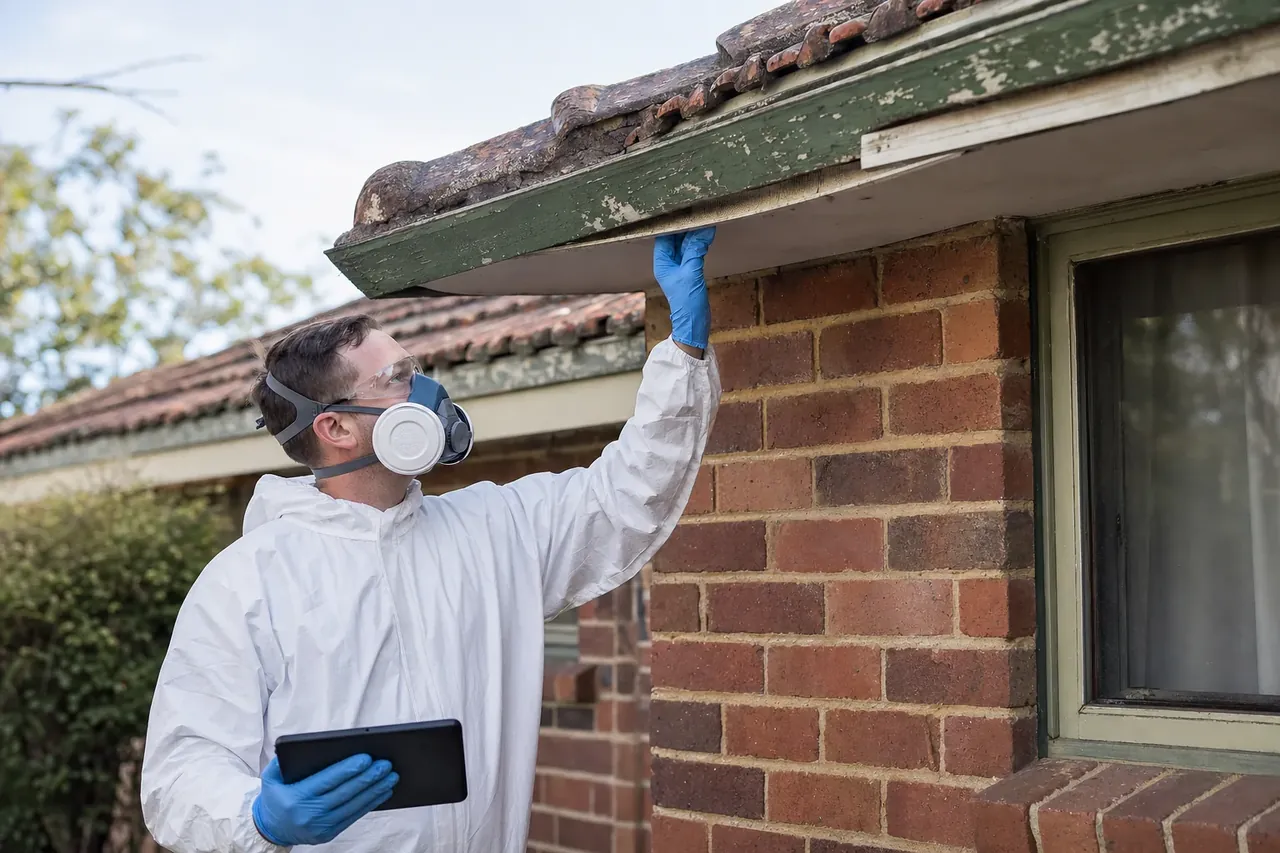
AI overview
In older Perth homes asbestos is most commonly found in eaves, fencing, wall and ceiling sheeting, wet-area linings, vinyl flooring backing and roof or shed sheeting. Any home built or renovated before the 2003 national ban can contain it, and no material can be confirmed as asbestos by sight alone. Knowing the likely locations helps you plan, but a Licensed Assessor still has to sample and NATA accredited laboratory-test each suspect material to be sure.
Key takeaways
- Any Perth home built or renovated before 2003 can contain asbestos.
- The most common spots are eaves, fencing, wet-area sheeting and old flooring.
- Bonded (solid) asbestos is more common in homes than friable material.
- You cannot confirm asbestos by colour, texture or age alone.
- Each distinct material must be sampled and tested on its own.
- Renovating or drilling into a suspect material is what makes it dangerous.
- If in doubt, leave it alone and have it tested before any work starts.
Asbestos was used in hundreds of common building products in Australia right up until it was fully banned in 2003. If your Perth home was built or renovated before then, it can contain asbestos in more places than most people expect.
This guide walks through the spots where it most often turns up, room by room. Use it to know where to be careful, not to make a diagnosis. The only way to confirm a material is asbestos is to sample and test it.
You cannot tell by looking
Asbestos sheeting can look identical to modern fibre-cement or plasterboard. Colour, texture and age are not proof either way. If a material is a suspect and it might be disturbed, it needs to be sampled and NATA accredited laboratory-tested.
Why the location matters
Knowing the likely locations does two things. It helps you avoid disturbing a material by accident, and it helps you scope a test sensibly so you are only paying to sample what actually needs checking.
Most asbestos in homes is bonded, meaning the fibres are locked into a solid sheet or product. Bonded material in good condition and left alone is generally low risk. The danger comes when it is drilled, cut, sanded, broken or left to weather and break down.
2003
Year asbestos was fully banned in Australia
Pre-2003
Any home from before then can contain it
In person
Every sample taken by a Licensed Assessor
Outside the house
The outside of an older Perth home is where asbestos is most common, partly because so much of it is exposed to the weather and slowly breaking down.
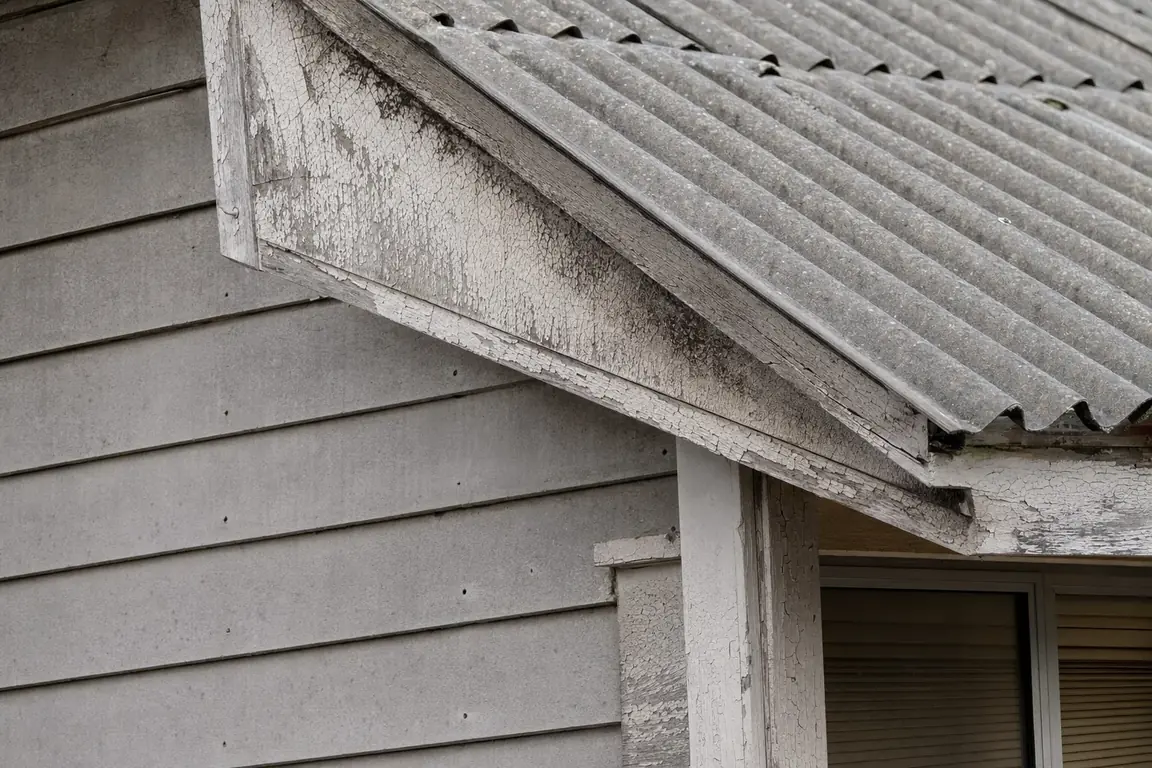
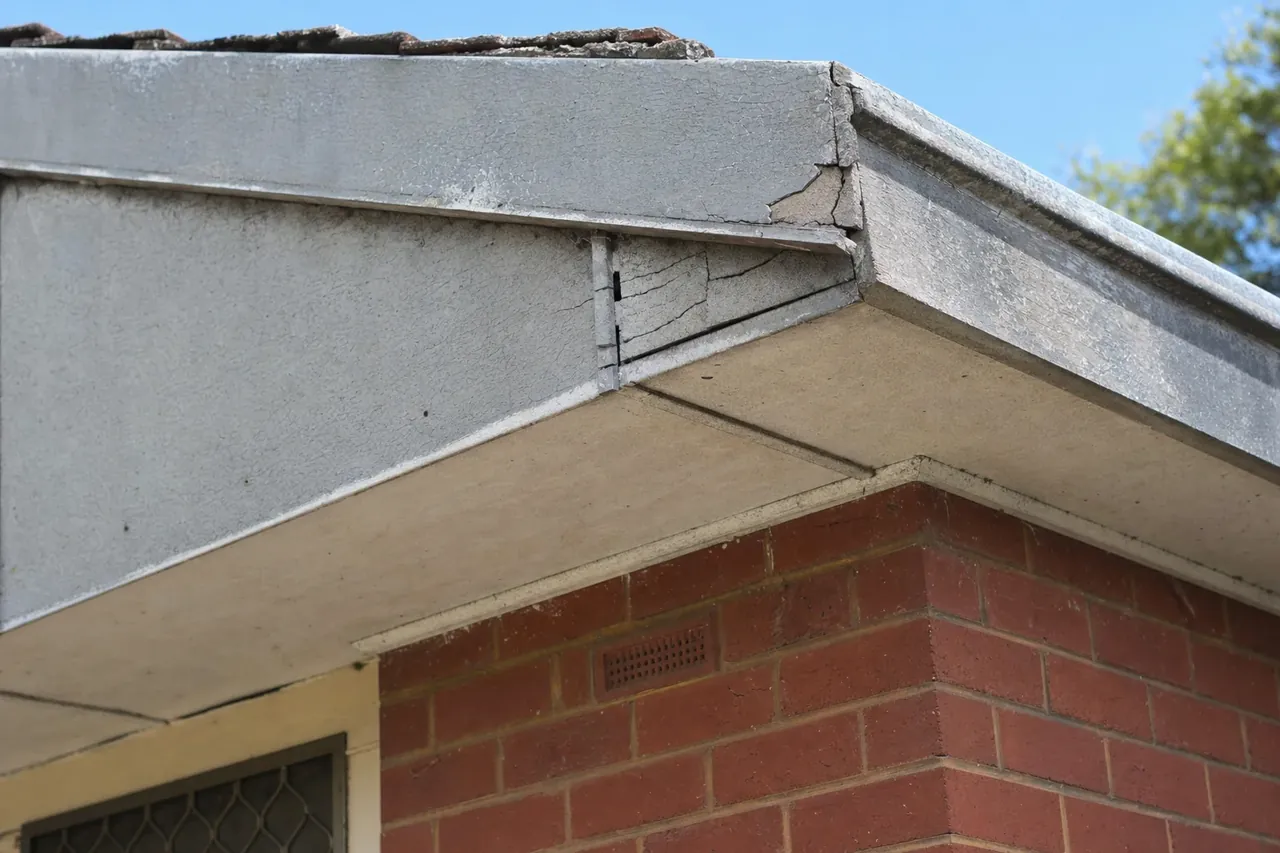
- Eaves and soffit linings under the roofline, one of the single most common spots.
- Fibre-cement fencing between properties, often the flat grey sheeting.
- Corrugated roof sheeting on homes, sheds, garages and carports.
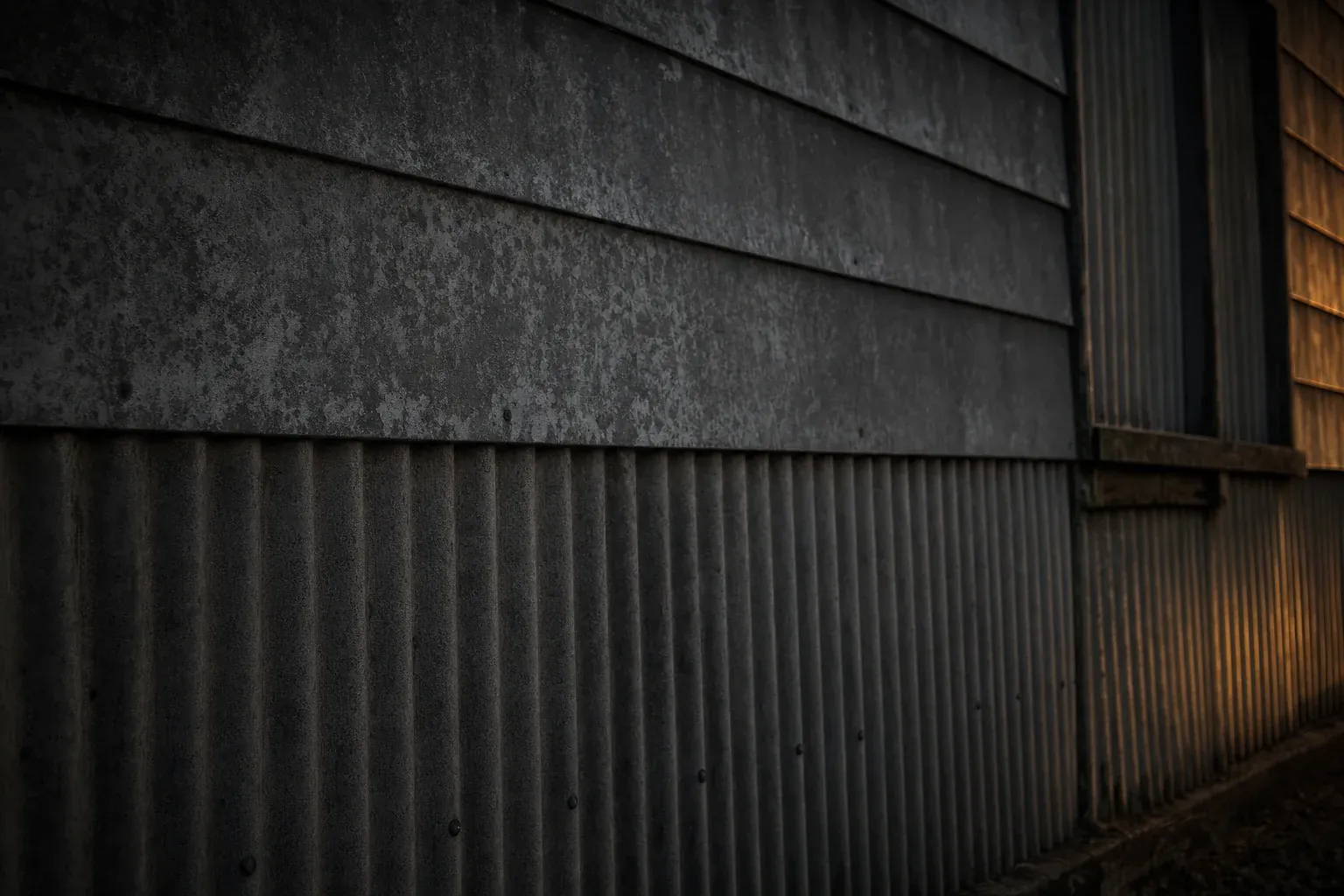
- Wall cladding and infill panels on the exterior of the house.
- Shed and outbuilding walls and roofs on the block.
- Old flues, downpipes and water tanks in some older properties.
Weathered eaves and old fence sheeting are the two spots we are asked about most in Perth. Both are common, and both are easy to disturb during a renovation.
Bathrooms, laundries and kitchens
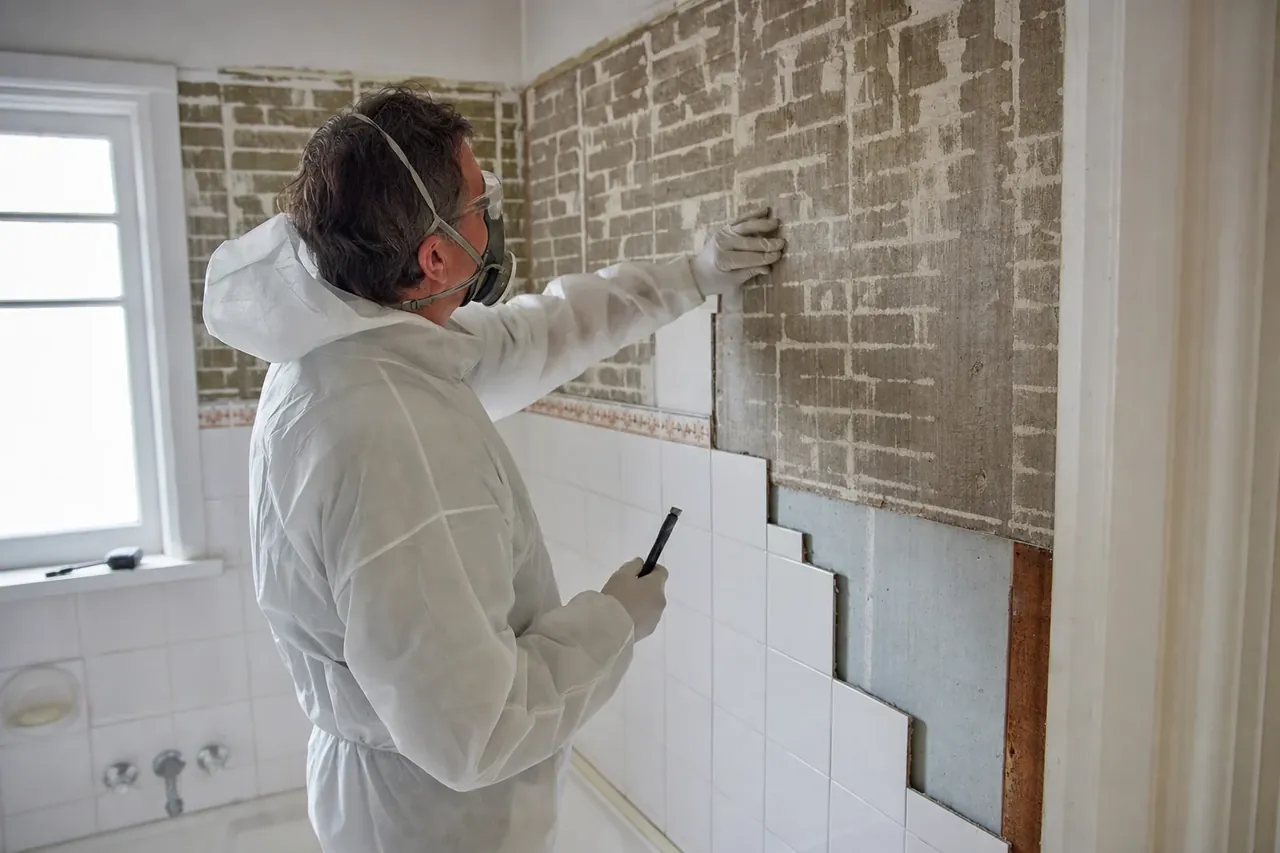
Wet areas are a classic hiding spot because asbestos sheeting was cheap, water resistant and easy to tile over. It is often hidden behind later renovations.
- Wall and ceiling sheeting behind tiles in bathrooms and laundries.
- Splashbacks and the sheeting behind kitchen cabinetry.
- Flooring underlay and the backing under old vinyl and lino.
- Around older hot water systems and behind wet-area fixtures.
Renovating a wet area?
Bathroom and laundry renovations are one of the most common reasons people disturb asbestos without realising. If the home is from before the ban, test the sheeting before you start pulling tiles off.
Walls, ceilings and floors
Inside the living areas, asbestos was used in flat sheeting and a few decorative products that are easy to miss.
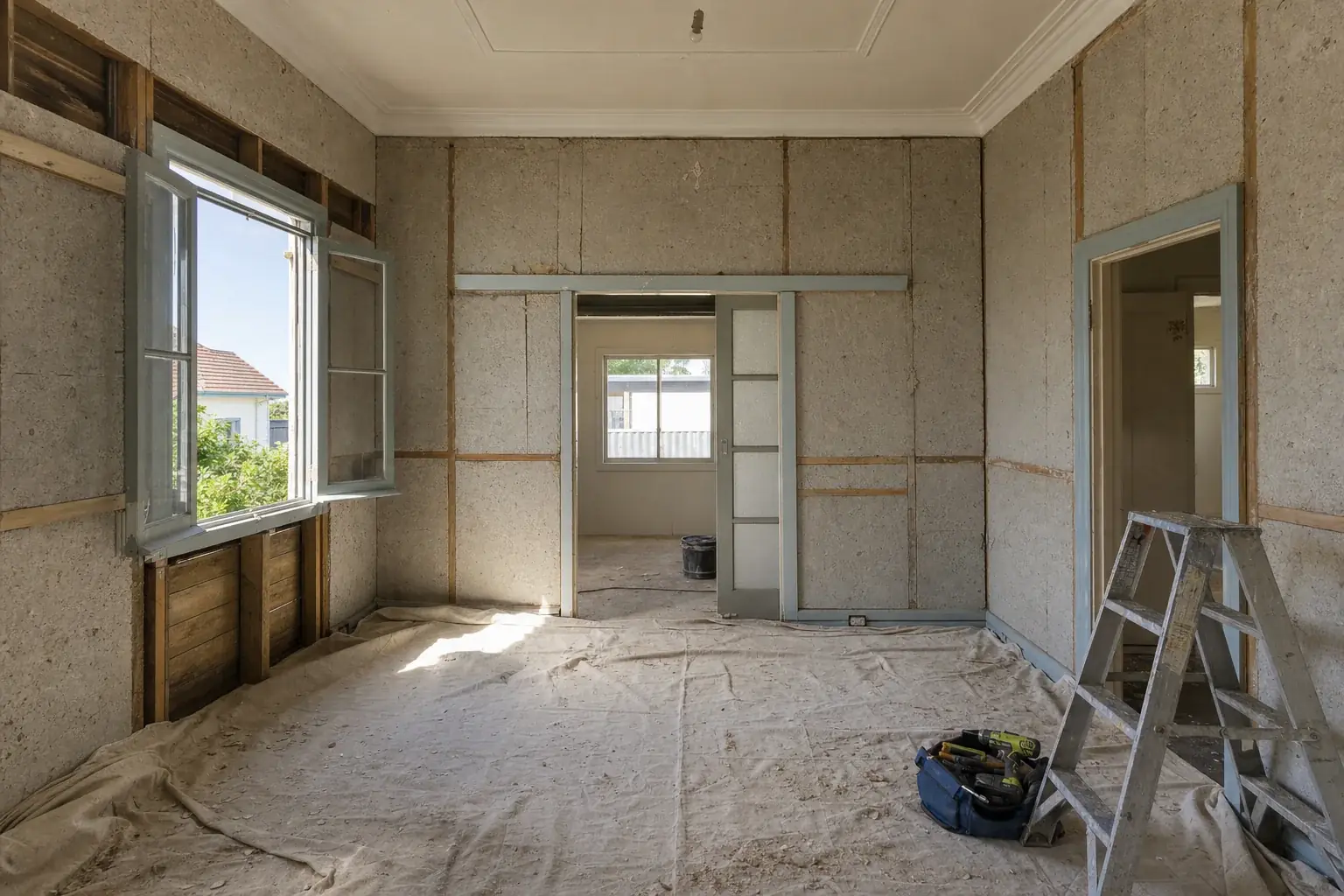
- Flat wall and ceiling sheeting, especially in older extensions and sleep-outs.
- Textured or patterned ceiling coatings in some homes of the era.
- Vinyl floor tiles and the backing under sheet flooring.
- Sheeting around fireplaces, heaters and behind wood heaters.
- Packing and insulation around some older fixtures and fittings.
| Material | Where it typically shows up | Common in |
|---|---|---|
| Flat fibre-cement sheet | Eaves, walls, wet-area linings, ceilings | Pre-2003 homes |
| Corrugated sheeting | Roofs, sheds, fences, carports | Pre-2003 homes and sheds |
| Vinyl and tile flooring | Backing and underlay of old flooring | Older kitchens and laundries |
| Textured coatings | Some decorative ceilings | Homes of the era |
Roof space, subfloor and meter box
Some of the trickiest spots are the ones you rarely look at. These are also areas where tradespeople work, so they matter before any job starts.
- Sheeting and old insulation products in the roof space.
- Subfloor sheeting, ducting and packing under the house.
- The backing board inside older electrical meter boxes.
- Around ducting, flues and service penetrations.
What to do if you find a suspect material
If you have spotted something that might be asbestos, the safest thing you can do is nothing. Do not break it, sand it, drill it or pull it apart to get a better look.
- Step 01
Leave it alone
Stop any work near the material and keep it undisturbed. Undamaged bonded material left in place is generally low risk.
- Step 02
Book a test
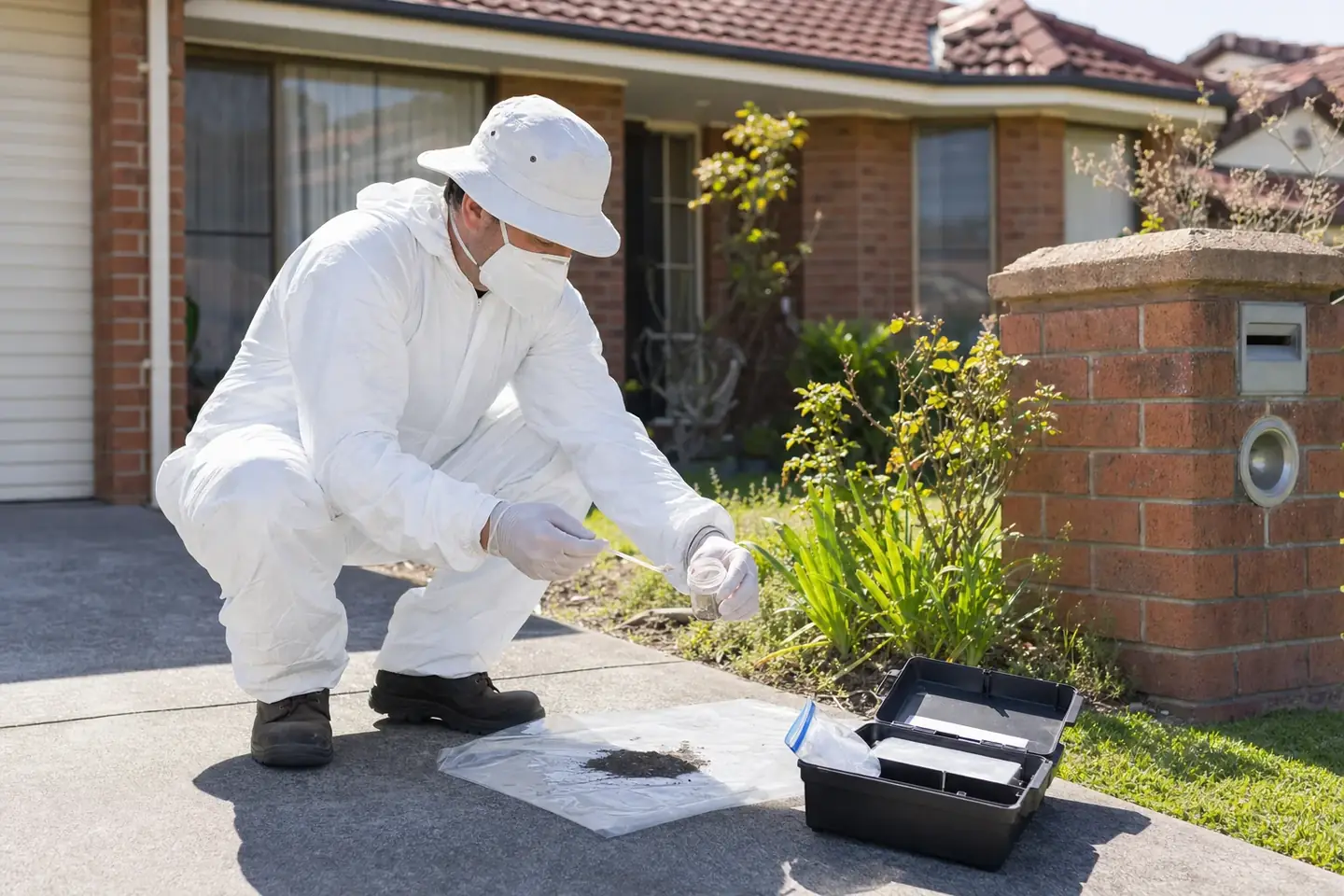
A WA Licensed Asbestos Assessor attends, takes a properly controlled sample and sends it to a NATA accredited laboratory.
- Step 03
Get the result
You receive a clear written result confirming whether asbestos is present, so you know exactly what you are dealing with.
- Step 04
Plan the work
If it is positive and needs to go, removal is a separate job for a licensed removalist. We can inspect and clear the area afterwards.
Testing is not removal
We test, sample, inspect, monitor and clear. We do not remove asbestos. Testing tells you what is there first so any removal is planned and done safely by a licensed removalist.
Knowing where asbestos hides is a good start, but it is only ever a guide. If you are renovating, buying, selling or just want peace of mind about an older Perth home, a Licensed Assessor can sample the suspect materials and give you a definite answer.
Not sure about a material in your property?
A Licensed Assessor can take a sample and give you a documented answer.
Frequently asked questions
There is no single room. In Perth homes the most common spots are the eaves outside, wet-area sheeting in bathrooms and laundries, old flooring, and sheeting in sheds and fences. Any pre-2003 material can contain it.
No. Asbestos sheeting looks almost identical to modern fibre-cement and other materials. Colour, texture and age do not confirm it either way. The only way to be sure is to sample the material and have it analysed at a NATA accredited laboratory.
Bonded asbestos that is in good condition and left undisturbed is generally low risk. The danger comes from drilling, cutting, sanding, breaking or weathering that releases fibres. If in doubt, leave it alone and have it tested before any work.
A WA Licensed Asbestos Assessor attends your property, takes a properly controlled sample of the suspect material and sends it to a NATA accredited laboratory. You get a clear written result. Call us and we will arrange it.
Related services
Written and reviewed by
Perth Asbestos Testing, Licensed Asbestos Assessor (WA)
This article is written and reviewed by a WA Licensed Asbestos Assessor who attends properties across Perth metro and regional WA in person. Information here is general guidance. For a definite answer about your property, the material needs to be sampled and tested.
(08) 6186 7484Topics covered