
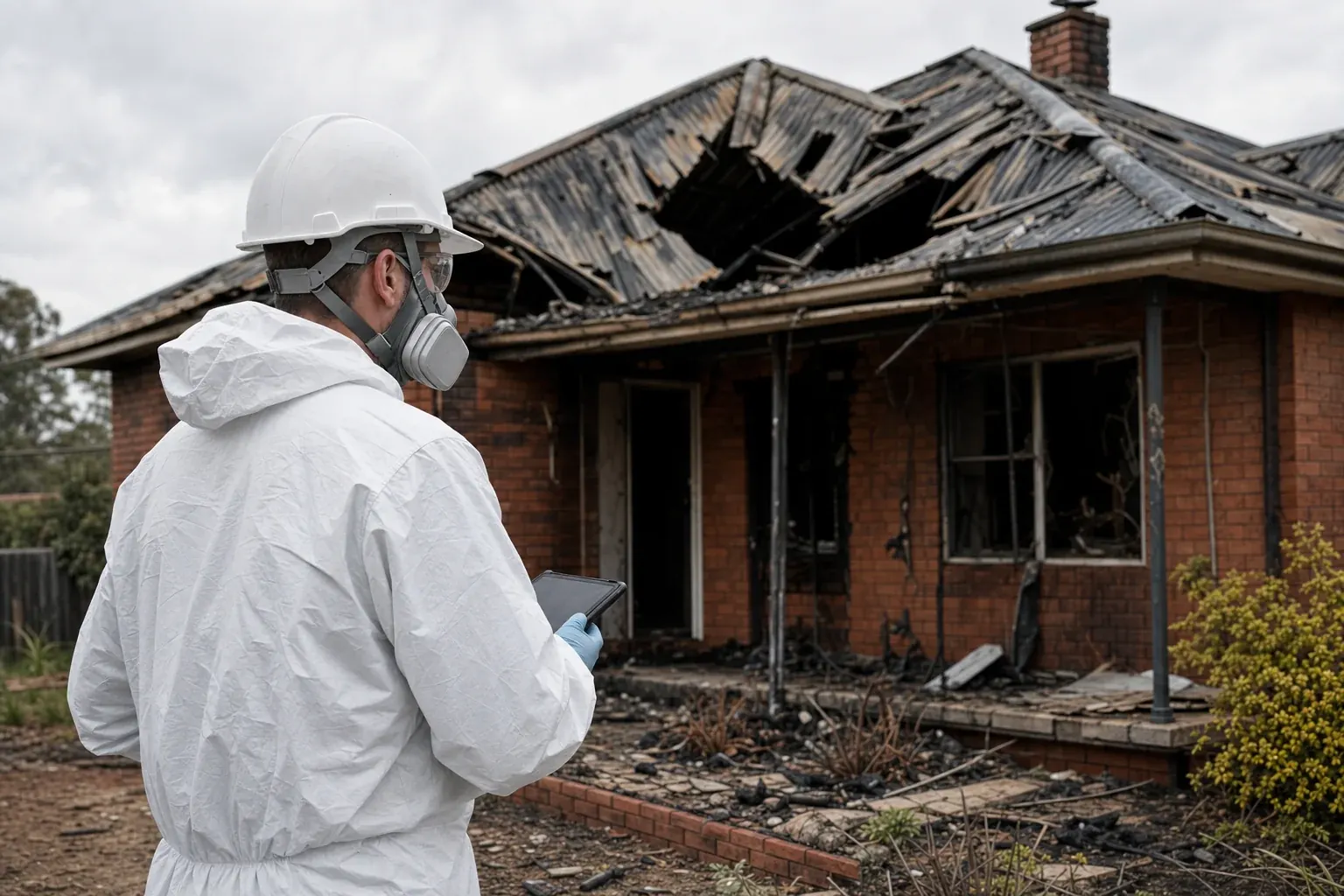
Post-fire & disaster
Post-Fire & Disaster Asbestos Response in Perth
Rapid asbestos assessment for fire, flood and storm-damaged properties. When a building is damaged, asbestos can be disturbed, and testing needs to come before the clean-up.
(08) 6186 7484Book this test
Tell us about the property. A Licensed Assessor calls you back, same-day available.
The short version
Why assessment must come before the clean-up
Fire, flood and storm damage can break apart, scatter and expose materials that contain asbestos, converting what was a contained and managed material inside the building fabric into a hazard distributed unpredictably across the site and potentially beyond the property boundary into neighbouring land, gutters and stormwater systems.
Entering the site to start clearing debris before an asbestos assessment has been completed can spread fibres further across the property and into…
“The only way to know for sure is to test.”
At a glance
Who attends
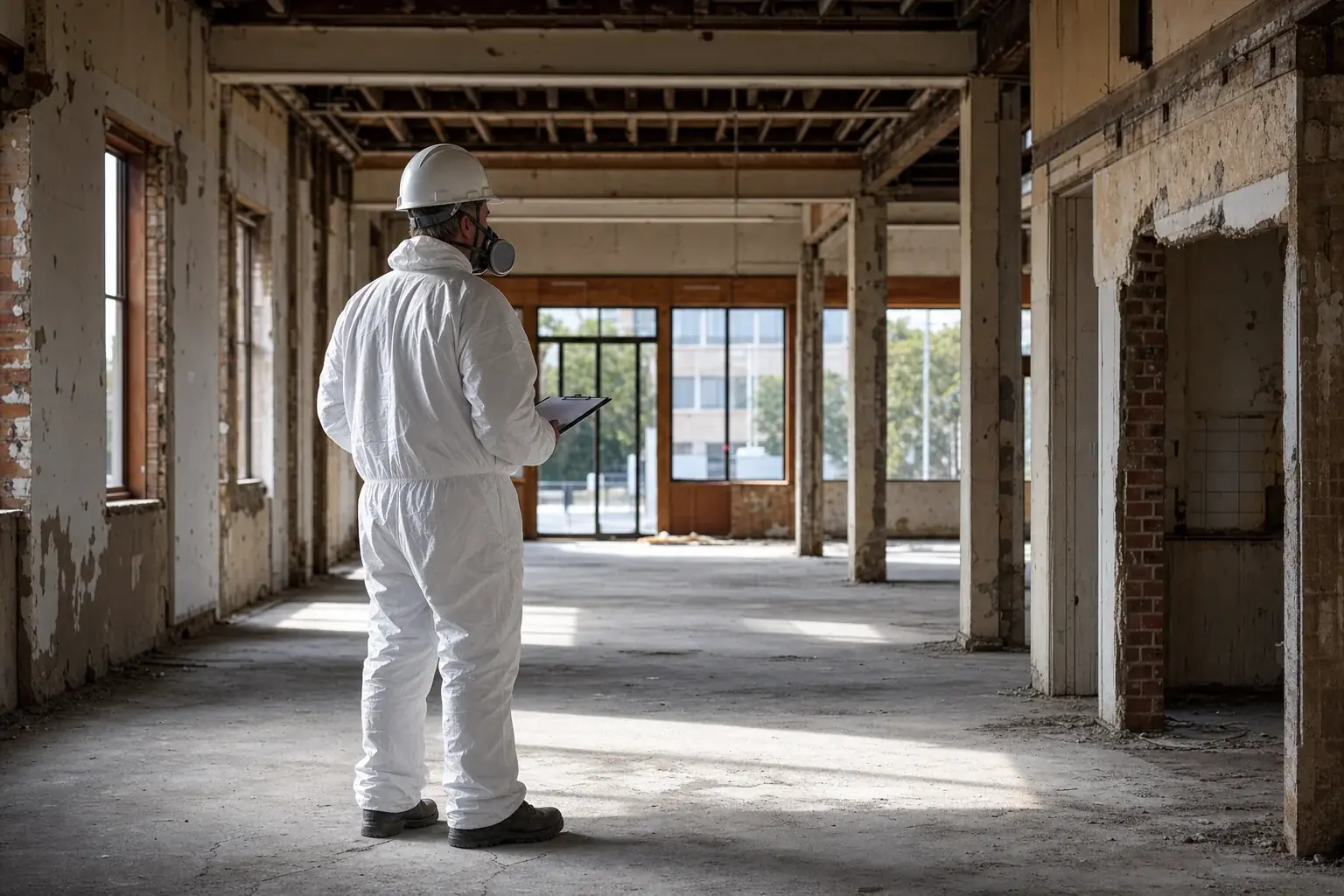
Licensed Asbestos Assessor (WA)
How it's analysed
NATA accredited laboratory
What you get
A clear written report
Turnaround
Same-day available on request
What you get
What is included

Priority attendance
We treat post-fire and disaster calls as urgent and aim to attend damaged properties as quickly as the safety of the site allows.

Damage and disturbance assessment
The assessor identifies and photographs exactly where asbestos-containing materials have been broken, scattered or otherwise…

Sampling and NATA accredited laboratory testing
Suspect debris and material fragments are sampled under chain of custody so the clean-up scope is based on confirmed results…

Written report for owners, builders and insurers
A clear written report supporting the insurance claim, the make-safe scope and the licensed removalist's planning for the…

Extent of contamination mapped
Where material has spread beyond the immediate damage zone, the assessment documents the full extent so the remediation plan is…

Safe access guidance
We advise on which areas of the site can be accessed before the assessment and which must remain undisturbed until the assessment…
Verbal briefing available immediately after the assessment
Where the insurer, builder or emergency manager needs an immediate response before the formal written report is finalised, we can…
In your report, you receive
- A written assessment report confirming which asbestos-containing materials were disturbed and where material has spread
- Photographs documenting the damage, material locations and distribution across the full extent of the affected area
- NATA accredited laboratory results for samples taken from suspect debris or material fragments
- Guidance on which areas should remain restricted or undisturbed until remediation is complete
- A report structured to support the insurance claim, make-safe scope and licensed removalist's planning
- Advice on what licence class and type of contractor the clean-up and remediation works will require
- Advice on the licence class required for the licensed removalist who will carry out the clean-up and remediation of the…
- Safe access guidance detailing which areas of the property can be accessed before the assessment, which must remain…
What we look at
Materials commonly disturbed in fire and disaster events
Tap any material to see where it turns up and what to watch for. If you are unsure what you are looking at, that is exactly what a sample confirms.
Sampled in personFibre cement sheeting exposed to fire can survive in a cracked, spalled or structurally weakened condition that looks manageable but is not. The heat exposure alters the physical structure of the material and the asbestos fibres that were previously bound within the hardened cement matrix can become partially released or loosely held in a way that makes disturbance more likely to release them. Handling this material as ordinary demolition debris without testing and appropriate controls is a significant and unnecessary exposure risk.
Corrugated asbestos cement roofing sheets that have cracked, slipped from their fixings or shattered during a fire, storm or structural collapse are among the most commonly encountered materials at disaster sites across Perth and regional WA. They cannot be confirmed as safe or hazardous by appearance alone and must be assessed and tested before any removal or general debris handling from the site begins.
Fire can char and disintegrate the asbestos insulation that was wrapped around pipes, boilers and heating ducts in older buildings, leaving friable material exposed and potentially distributed across roof voids and service areas of the damaged building. This type of material is typically higher-risk than the non-friable products encountered in intact residential buildings, and its presence after a fire event significantly changes the risk profile of the entire site.
Following a significant structural collapse or fire, asbestos-containing materials can be broken into fragments that are visually indistinguishable from ordinary building rubble and construction waste. An assessment scopes the distribution and concentration of those fragments in the debris so the clean-up team understands what they are working with and what controls they need before any handling, sorting or removal of material begins.
Flood events can cause older asbestos-containing wet area wall linings and vinyl floor tiles to delaminate, become saturated and physically break apart in ways that release fibres from the previously intact material. These materials can retain a significant contamination risk even after flood water has receded and the area appears visually dry, which is why an assessment before any works begin is essential rather than optional.
Storm events can move asbestos-containing fragments off the property and into gutters, stormwater drains, street verges and neighbouring gardens where the material can continue to be disturbed by normal activity. A thorough assessment scopes the full extent of distribution beyond the property boundary so the remediation plan covers all affected areas and does not leave contaminated material in place on or adjacent to the site.
Eaves and soffit boards on older Perth homes are frequently fibre cement and can be cracked, displaced or broken by storm events involving high winds, falling branches or significant roof damage. When these materials are exposed and broken by a storm event, the assessment documents their condition and distribution so the make-safe and repair scope is clear before any repair contractor begins work.
Simple process
How it works
Call us immediately after the event
Call (08) 6186 7484 as soon as the site is safe from the immediate hazards of the fire, flood or storm.
On-site assessment of the damage and disturbance
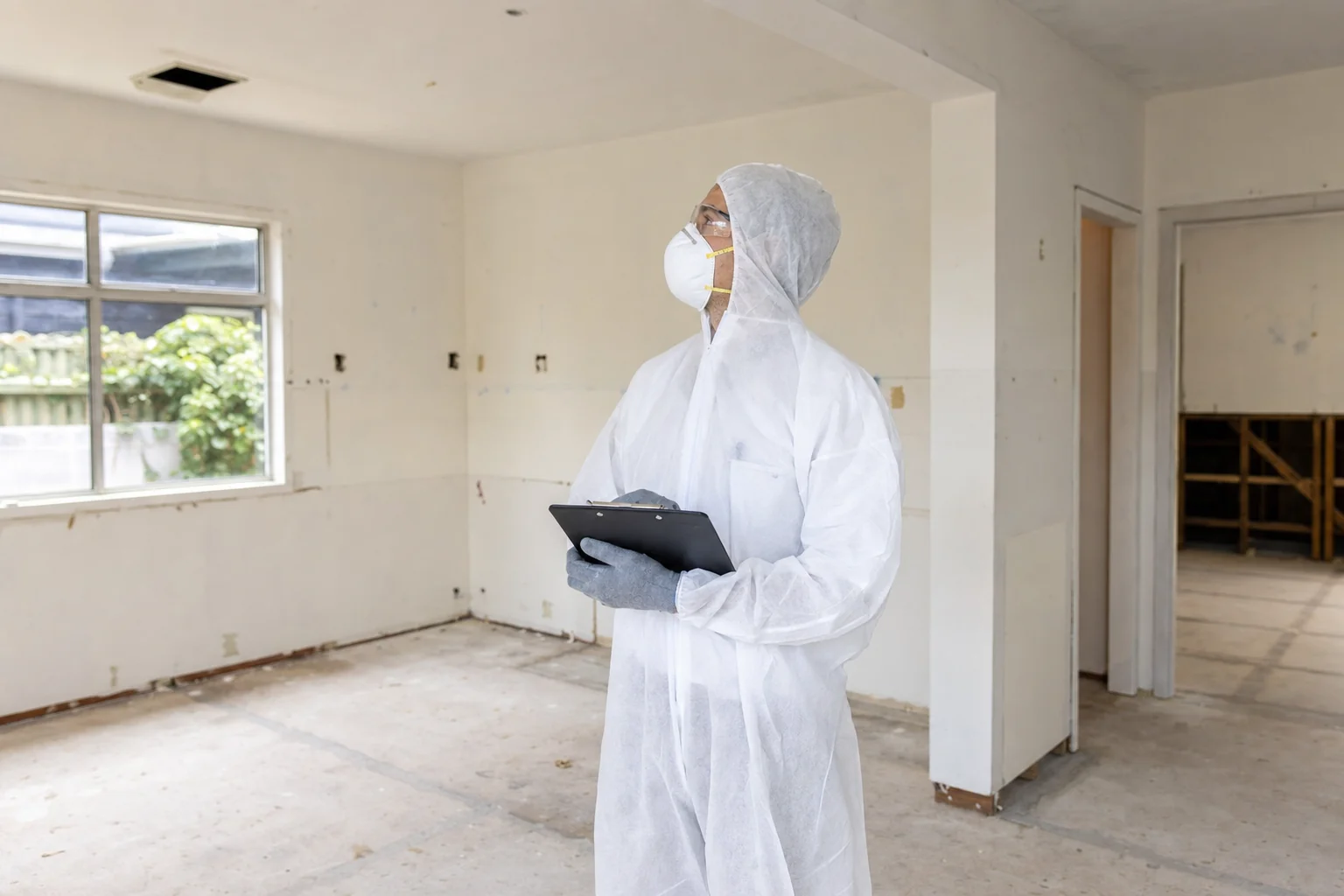
The assessor attends in full PPE and works across the damaged site identifying, photographing and documenting all areas where asbestos-containing…
Sampling and NATA accredited laboratory analysis
Suspect debris and material fragments are sampled under chain of custody and dispatched to the NATA accredited laboratory.
Written report is delivered
The written report confirms what was found, the extent of contamination, and what the insurer, builder and licensed removalist need to know before the…
We can liaise directly with the insurer or make-safe builder
Where it would be helpful, we can provide a verbal briefing to the insurer's claims handler or the make-safe builder directly, so the key findings are…
In person
Every sample taken by a licensed assessor

NATA accredited laboratory analysed
NATA accredited laboratory result
Documented
Chain of custody, start to finish

Same-day
Rush results available on request
Common situations
When to call us
- 01
Immediately after a house or building fire
Before any debris is entered, handled or moved, an assessment establishes what has been disturbed and how far material has spread.
- 02
After storm or flood damage
Damaged roofing, cladding and flooring may contain asbestos that has been cracked, broken, scattered or saturated.
- 03
When an insurer or builder needs a make-safe scope
Builders and insurers need a documented assessment to accurately scope and price the make-safe and remediation works.
- 04
When material has spread to a neighbouring property
Where a fire, flood or wind event has moved asbestos-containing material beyond the property boundary, the assessment must cover the full extent of…
- 05
When a council or WorkSafe notification is required
A written assessment from a Licensed Assessor supports formal notifications to a local council, WorkSafe WA or the WA Environmental Protection…
- 06
When emergency services or authorities require a clearance
Following a significant structural fire or an event that results in extensive asbestos disturbance, local authorities, WorkSafe or the Fire and…
Common questions
We treat fire and disaster calls as urgent. Call (08) 6186 7484 directly and we will confirm our attendance as quickly as possible and advise on what to do with the site and who should and should not access it in the meantime.
No. Moving debris before the site has been assessed can spread asbestos fibres across the property and beyond its boundary. Leave the area undisturbed, restrict access to the damaged area as much as possible, and wait for the assessment before any debris handling or clean-up activity begins.
Yes. Our written report documents what asbestos-containing materials were present in the building and how they were affected by the fire, flood or storm. Insurers and their make-safe builders rely on this report to accurately scope and price the remediation works and to support the claim.
We can extend the assessment to cover the distribution of material beyond the property boundary. The full scope required is confirmed when we discuss the event and the site, so the assessment covers all affected areas.
No. We assess, document and subsequently provide the independent clearance after the clean-up is complete. The asbestos removal and clean-up itself must be carried out by a licensed asbestos removalist, which is a separate party to us. We advise on what licence class the specific works will require.
Communicating with neighbours is an important step, particularly where material may have spread beyond the property boundary. We can advise you on what the assessment confirmed about the distribution of any asbestos-containing material across and beyond the property so that any communication to neighbours is based on confirmed information rather than speculation. A Licensed Assessor's written report is also a credible and neutral document to share with a concerned neighbour, as it provides factual information about what was found and what is being done about it.
Related services
You might also need
Asbestos Air Monitoring
On-site air monitoring during works to measure airborne fibre levels and confirm the area is safe.
Learn moreAsbestos Clearance Inspections
Independent clearance inspections and certificates after licensed removal works, so work can safely continue.
Learn moreAsbestos Sampling & NATA Accredited Laboratory Testing
Properly documented bulk samples taken by a Licensed Assessor and analysed at a NATA accredited laboratory.
Learn more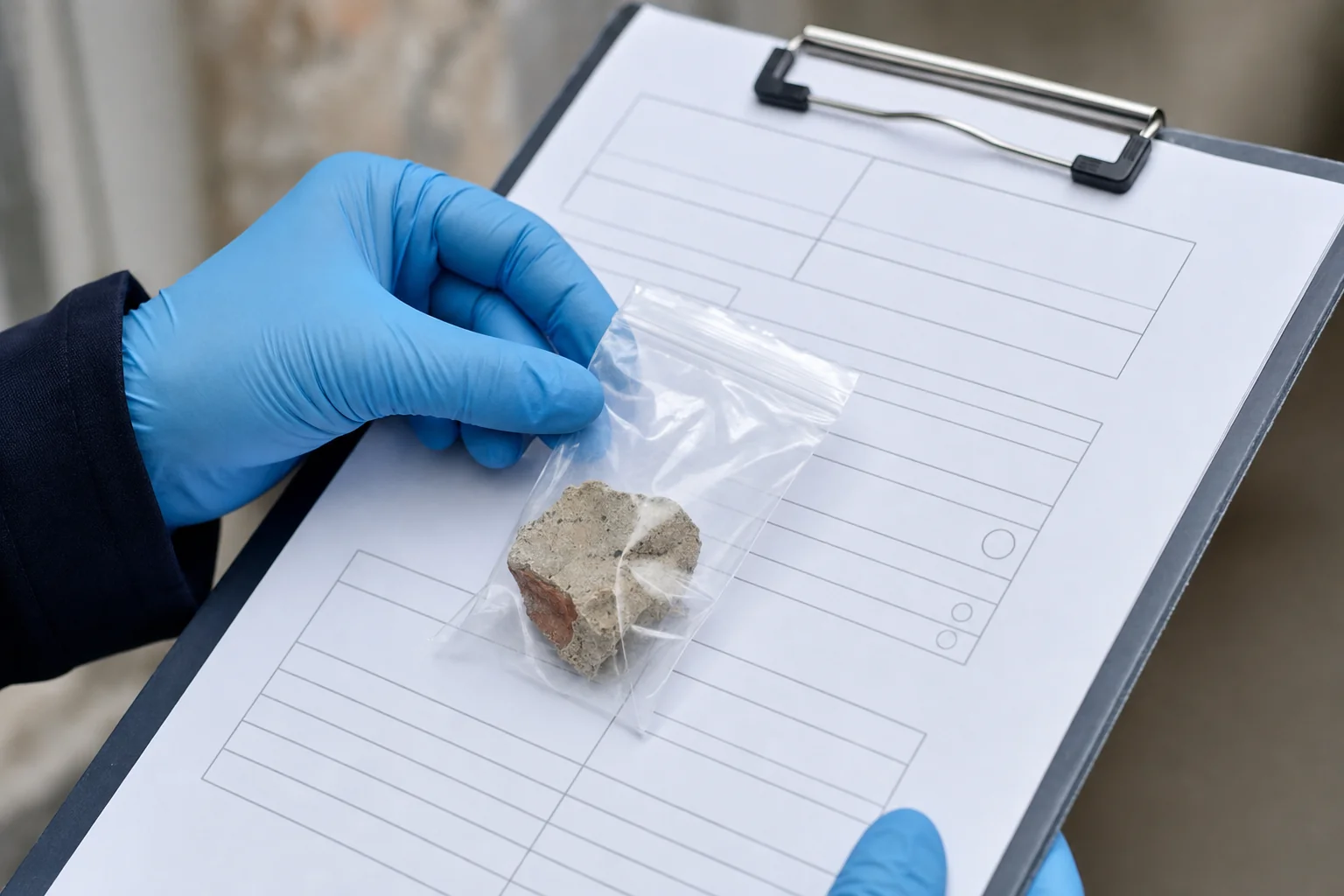
Book post-fire & disaster response
Not sure what you're
looking at?
Don't guess. Book a test with Perth's Licensed Asbestos Assessor and get a written answer you can act on.
(08) 6186 7484Request a test or a quote
Tell us about the property and we will get straight back to you.