
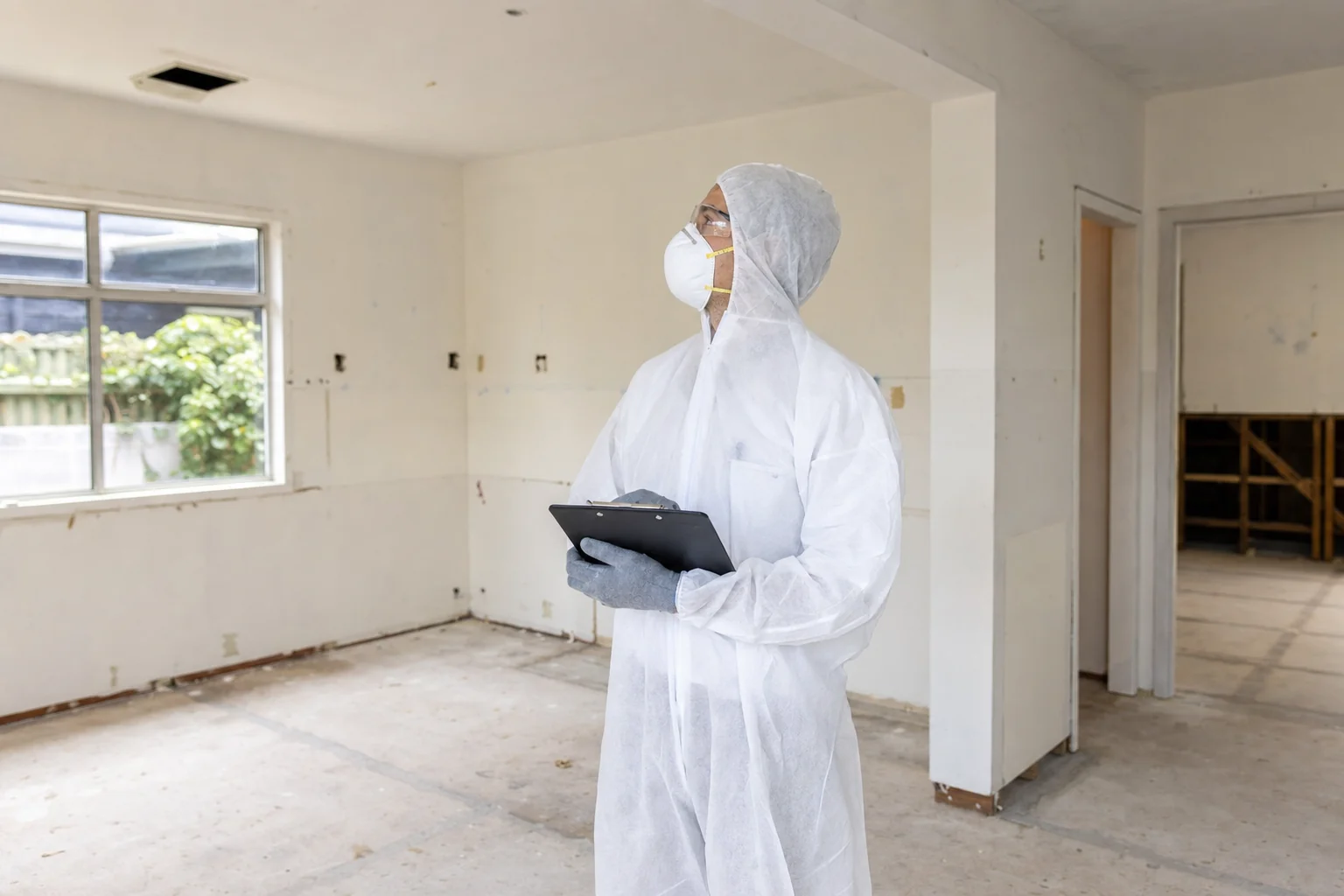
Clearance inspections
Asbestos Clearance Inspections & Certificates in Perth
An independent clearance inspection after licensed removal works, confirming the area has been properly cleaned so the site can safely move on to the next stage.
(08) 6186 7484Book this test
Tell us about the property. A Licensed Assessor calls you back, same-day available.
The short version
The independent check after removal is done
A clearance inspection is conducted by an independent Licensed Assessor after a licensed removalist has finished the removal works. The assessor must be a different party to the removalist who carried out the job. That independence is not a procedural formality. It is what gives the clearance its credibility and what makes the certificate meaningful to a builder, insurer or regulator who relies on it.
The assessor systematically checks that the removal area and all surrounding surfaces have been cleaned to the required standard.
“The only way to know for sure is to test.”
At a glance
Who attends
Licensed Asbestos Assessor (WA)
How it's analysed
NATA accredited laboratory
What you get
A clear written report
Turnaround
Same-day available on request
What you get
What is included

Systematic visual clearance inspection
The assessor checks every surface in the removal area and surrounding zone to confirm cleaning meets the required standard before…

Clearance air monitoring where required
Air testing inside and around the work zone supports the visual inspection with measured fibre counts where the removal type or…

Full independence from the removalist
The clearance assessor has no commercial relationship with the licensed removalist.

Formal signed clearance certificate
You receive the signed clearance documentation that builders, principal contractors, building managers and insurers rely on to…

Programme-conscious attendance
We understand that clearance delays hold up the project.
Waste disposal documentation review
We confirm that consignment notes and waste disposal records are in order as part of the inspection and the complete project…
Certificate referencing the assessor's licence details
The clearance certificate includes the Licensed Assessor's name and WA licence number, confirming to any third party that the…
In your report, you receive
- A signed clearance certificate confirming the removal area passed the independent inspection
- A written record of what was inspected, the condition found, and the basis for the clearance decision
- Air monitoring results where clearance air testing was conducted, attached to the certificate
- Confirmation that waste disposal consignment records were reviewed and are in order
- Documentation that principal contractors, insurers and building managers can rely on for project records
- Written advice specifying exactly what further cleaning is needed if any area did not pass the initial inspection
- A record confirming the date and time of the clearance inspection, the assessor's name and licence details, and the…
- Full independence documentation confirming the assessor has no commercial relationship with the removal contractor, so…
What we look at
What we check during a clearance inspection
Tap any material to see where it turns up and what to watch for. If you are unsure what you are looking at, that is exactly what a sample confirms.
Sampled in personThe physical containment erected around the removal area is inspected to confirm it was maintained in a structurally sound and sealed condition throughout the works, that seams and penetrations are properly taped, and that the inner surfaces have been appropriately decontaminated before the enclosure is dismantled. A compromised enclosure during the removal undermines the entire containment and changes the significance of the clearance.
The entry and exit decontamination units used by workers throughout the removal are checked to confirm they were correctly configured and that the documented decontamination sequence was followed. A decontamination unit that was not properly set up or consistently used as required undermines the integrity of the containment and is a significant finding in any clearance inspection.
Every surface within the removal area is checked for residual asbestos-containing material, visible fragments, dust deposits or debris that should have been cleaned before the clearance inspection was called. Any visible residue means the area is not ready for clearance. The assessor documents exactly what was found and specifies clearly what additional cleaning is required before the inspection can be passed.
Areas immediately outside the formal containment zone are also assessed, particularly where the boundary of the removal enclosure could have allowed dust migration or debris to move beyond the designated work area during the activity. This is especially relevant where a clearance air test forms part of the overall clearance process.
Where air monitoring was conducted during or immediately after the removal, the filter analysis results from the NATA accredited laboratory are reviewed as part of the clearance process. Fibre counts at or below the accepted clearance criterion are a required component of the formal Class A clearance and add significant weight to any Class B clearance as well.
The assessor confirms that asbestos waste disposal documentation is in order, including consignment notes demonstrating that all asbestos-containing waste was removed from the site and delivered to a licensed asbestos waste disposal facility. Complete and traceable waste disposal records are an expected part of a properly completed removal project.
In multi-storey buildings and strata complexes, corridors, stairwells and common areas immediately adjacent to the removal work zone are checked during the clearance inspection to confirm that dust migration during the works has not resulted in fibre deposits in these areas before they are returned to regular occupant use.
Simple process
How it works
Coordinate timing with the removal contractor
Contact us when the removal is nearing completion.
Visual clearance inspection of the entire removal area
The assessor works through the removal area systematically, checking all surfaces, the enclosure, decontamination units and adjacent areas for any…
Clearance air testing where required
Where the removal type, site conditions or applicable regulations require it, air monitoring is run inside and around the work area after the removal…
Clearance certificate issued and delivered
Once the area passes inspection and any air monitoring results confirm fibre levels are within the clearance criterion, the signed certificate is…
Documents are provided in a usable format
The complete clearance documentation package is delivered in both PDF and printed form on request, formatted for immediate inclusion in the principal…
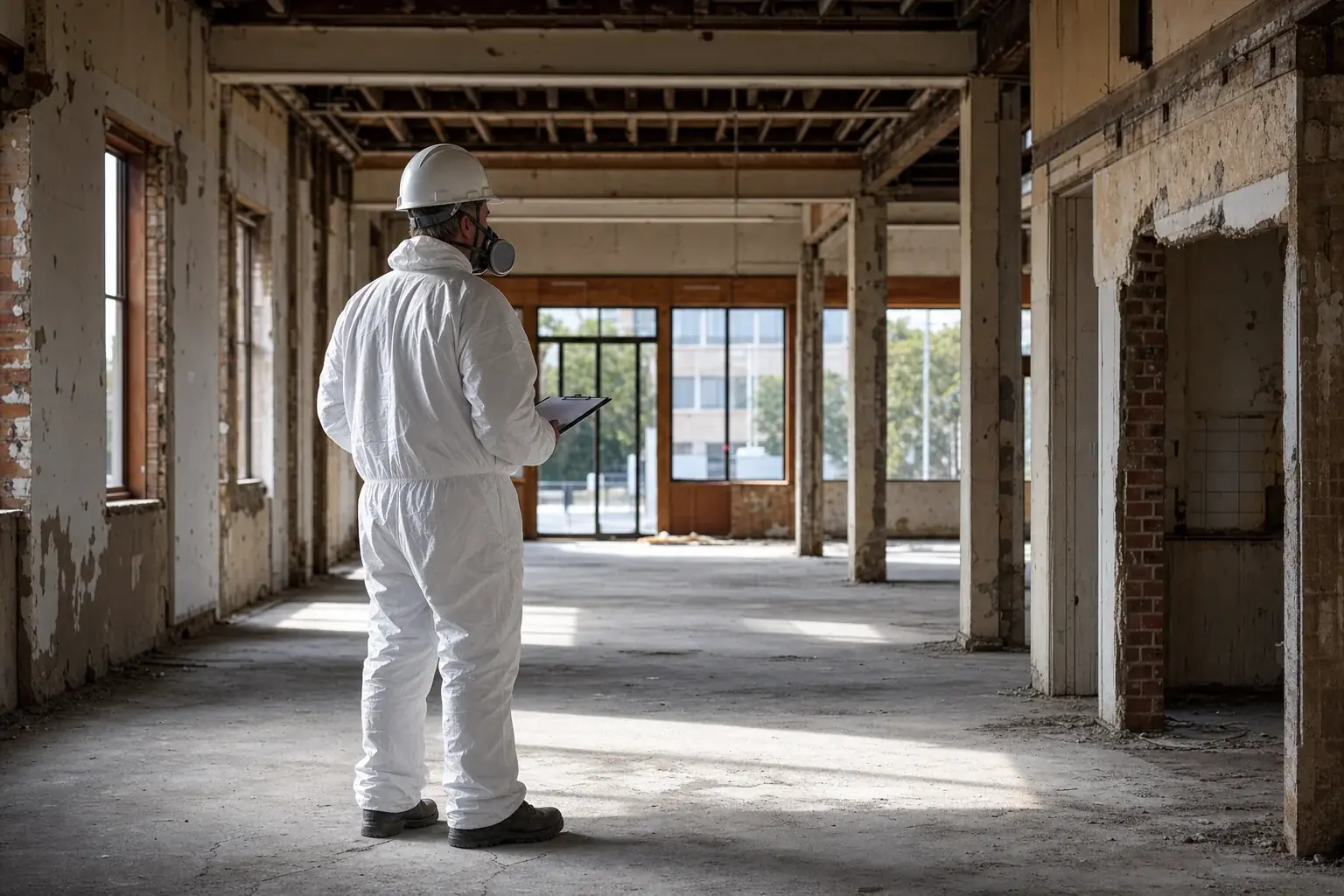
In person
Every sample taken by a licensed assessor

NATA accredited laboratory analysed
NATA accredited laboratory result
Documented
Chain of custody, start to finish
Same-day
Rush results available on request
Common situations
When you need a clearance inspection
- 01
After any licensed asbestos removal
An independent clearance by a Licensed Assessor is required by WA legislation after Class A friable asbestos removal and is expected by most principal…
- 02
Before following trades return to the area
Builders, electricians, plasterers, painters and all following trades must not re-enter the removal area until an independent clearance has been…
- 03
Before a building or area is reoccupied
When removal has taken place in a building that people will use again, the clearance provides documented confirmation that the area is safe for…
- 04
For insurance and compliance documentation
The clearance certificate is part of the project's compliance trail.
- 05
After emergency or unplanned removal
Where asbestos was urgently removed following a fire, storm damage or accidental disturbance, a clearance inspection confirms the area is safe before…
- 06
When the building is part of a managed property portfolio
Property managers and portfolio owners who maintain clearance certificates for every asbestos removal project across their portfolio have a documented…
- 07
When a heritage or strata building requires third-party evidence
Heritage buildings and strata complexes where the owners corporation or a heritage authority requires independent evidence that asbestos removal has…
Common questions
No. The clearance must be conducted by an independent Licensed Assessor who has no commercial relationship with the removal contractor. This independence is what gives the certificate its credibility and its legal standing, and it is a regulatory requirement for Class A removal work.
It confirms that at the time of inspection the removal area was cleaned to the required standard and, where air monitoring was conducted, that measured airborne fibre levels were within the accepted clearance criterion. It provides documentary evidence of independent verification of the completed works.
A formal clearance by a licensed assessor is required under WA legislation after Class A friable asbestos removal. Most principal contractors and building managers also require independent clearance after Class B non-friable removal, regardless of the formal regulatory requirement for the specific work type. We can advise on what applies to your works.
If the removal area does not meet the required standard, we document exactly what was found and explain what additional cleaning or rectification is required. The removalist must complete that work and present the area again for re-inspection.
A visual-only clearance can often be completed and the certificate issued on the same day. Where air monitoring is part of the clearance, the timeframe depends on NATA accredited laboratory turnaround. Rush turnaround is available when the project programme cannot wait.
Class A friable asbestos removal requires an independent clearance by a Licensed Assessor regardless of the scale of the project. For Class B non-friable removal at a residential property, the formal regulatory requirement for a clearance certificate varies depending on the specific scope and method of the works. We can advise on what applies to your specific project when you contact us, and many home owners and principal contractors request an independent clearance after Class B work for the documented assurance it provides.
Related services
You might also need
Asbestos Air Monitoring
On-site air monitoring during works to measure airborne fibre levels and confirm the area is safe.
Learn moreAsbestos Inspections & Surveys
Residential and commercial inspections that identify and document suspected asbestos-containing materials.
Learn morePost-Fire & Disaster Response
Rapid asbestos assessment for fire, flood and storm-damaged properties for owners, builders and insurers.
Learn more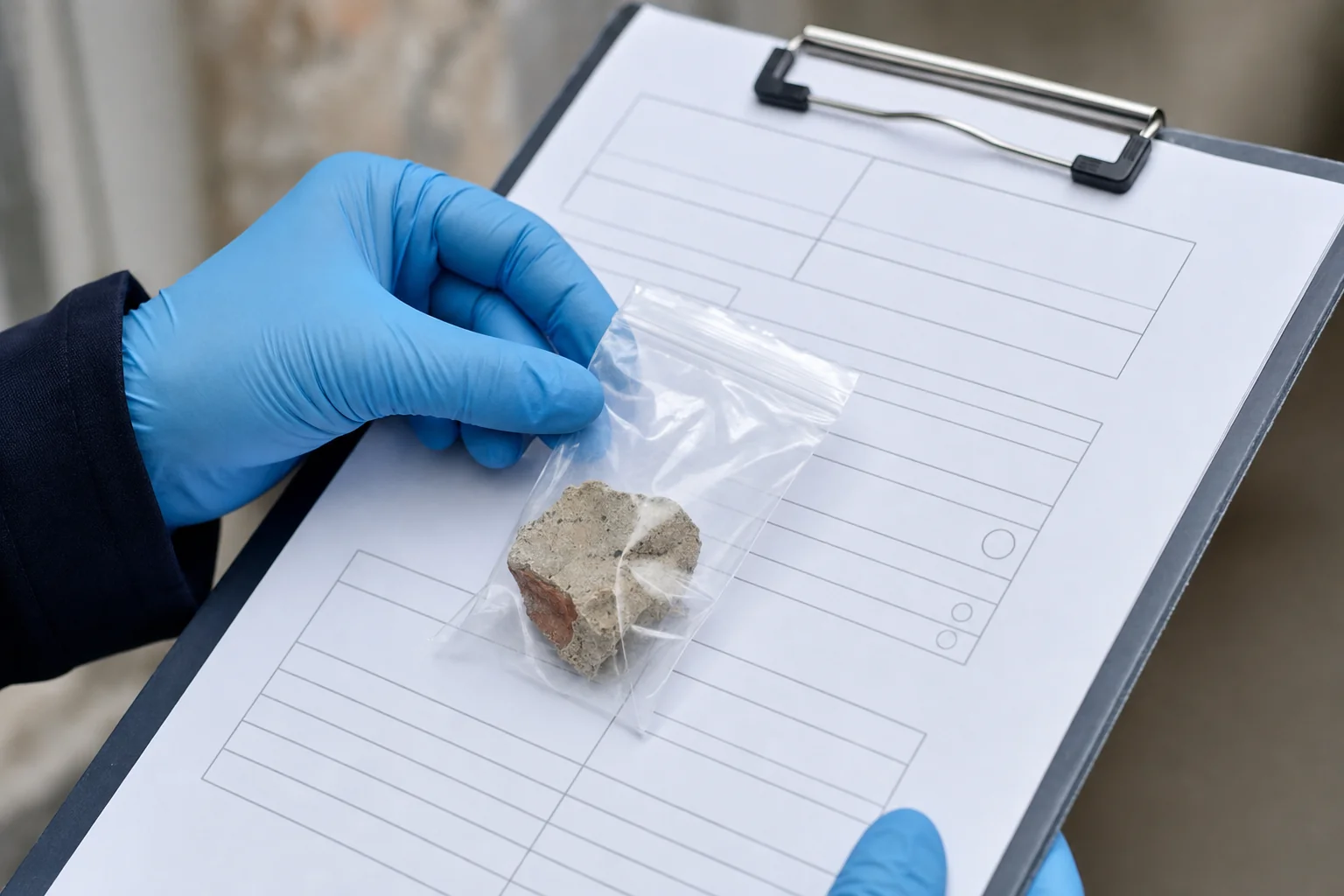
Book asbestos clearance inspections
Not sure what you're
looking at?
Don't guess. Book a test with Perth's Licensed Asbestos Assessor and get a written answer you can act on.
(08) 6186 7484Request a test or a quote
Tell us about the property and we will get straight back to you.