
Air monitoring
Asbestos Air Monitoring in Perth
On-site air monitoring during works to measure airborne fibre levels, so you can prove the area around a job stays within safe limits while it is happening.
(08) 6186 7484Book this test
Tell us about the property. A Licensed Assessor calls you back, same-day available.
The short version
Measuring fibres in the air as the work happens
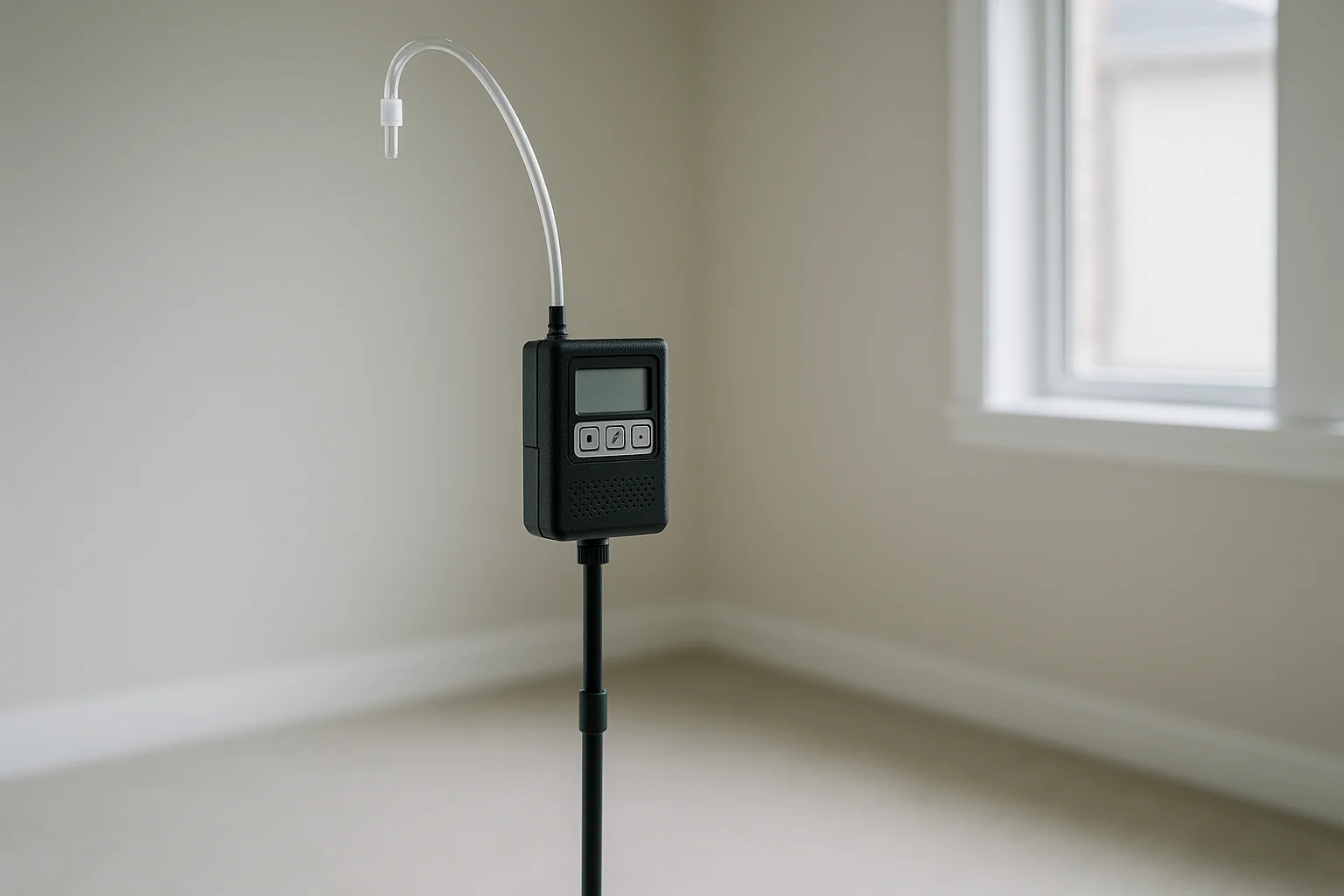
Air monitoring draws air at a calibrated flow rate through a membrane filter over a defined sampling period. The filter is then sent to a NATA accredited laboratory where the fibres captured on it are counted under phase contrast microscopy. The result is a measured fibre concentration expressed as fibres per millilitre, which can be compared directly against the occupational exposure limits set under WA work health and safety legislation.
Monitoring is conducted during active disturbance work to confirm in real time that control measures are holding and that fibre levels in and around…
“The only way to know for sure is to test.”
At a glance
Who attends
Licensed Asbestos Assessor (WA)
How it's analysed
NATA accredited laboratory
What you get
A clear written report
Turnaround
Same-day available on request
What you get
What is included

Control monitoring during active works
Calibrated sampling pumps run throughout the removal or disturbance works to confirm that fibre levels in and around the work zone…

NATA accredited laboratory filter analysis
Filters go to a NATA accredited laboratory for fibre counting under phase contrast microscopy, producing a measured result against…

Background monitoring
Sampling at locations away from the work area runs simultaneously to establish an ambient baseline, so readings within the work…
Clearance air testing after works
Air testing after the removal confirms that fibre levels have returned to background before the physical enclosure is removed and…

Written monitoring report
You receive a documented report showing each sampling location, the period of sampling, the measured fibre count per millilitre…

Turnaround that fits your programme
Standard and rush NATA accredited laboratory turnaround options are available.
Documentation for insurer and regulatory requirements
The monitoring report is formatted to satisfy the documentation requirements of principal contractors, building insurers, WorkSafe…
In your report, you receive
- A written monitoring report with fibre counts for each sampling location and sampling period
- Background monitoring results to provide context for work-zone readings during the job
- NATA accredited laboratory filter analysis reports attached to the main monitoring document
- A spatial record of sampling locations confirming the coverage of monitoring across the site
- A clear statement of whether all measured results were within accepted occupational limits
- Documentation suitable for project WHS files, insurer requirements and regulatory compliance records
- A summary statement confirming whether all monitoring results were within the accepted occupational exposure limits for…
- All records formatted for inclusion in the principal contractor's WHS file and suitable for presentation to WorkSafe…
- An independent assessor's attendance record and the monitoring report together create a complete paper trail for the…
What we look at
Situations where we commonly conduct air monitoring
Tap any material to see where it turns up and what to watch for. If you are unsure what you are looking at, that is exactly what a sample confirms.
Sampled in personRemoval of friable asbestos-containing materials under a Class A licence requires independent air monitoring to be conducted by a licensed assessor during the works. This is a statutory requirement under the WA Work Health and Safety (General) Regulations and is not discretionary. The monitoring must be performed by an assessor who is completely independent of the removal contractor, and the result must be documented in a written monitoring report.
Class B removal of non-friable asbestos-containing materials does not carry the same statutory monitoring obligation as Class A work, but principal contractors, building managers and many commercial insurers routinely require independent monitoring as a documented safeguard before following trades return to the work area. This is commercially standard practice across most Perth construction and refurbishment projects that involve asbestos-containing materials.
When asbestos-related works are carried out in a building that continues to be occupied by others, such as a strata building, a retail centre or a multi-tenancy commercial building, air monitoring provides documented confirmation that areas outside the direct work zone are not being affected. This supports the building manager's ongoing duty of care to all occupants of the building during the works.
Works near asbestos-containing materials in a school, childcare facility or healthcare setting carry heightened duty-of-care obligations to the people who use those buildings. Independent air monitoring during the works produces the measured record those obligations require and gives the management authority the documented evidence it needs to demonstrate appropriate oversight was maintained throughout the project.
After removal works are complete, before the physical enclosure is struck and before following trades re-enter the work area, air testing inside and around the work zone provides measured confirmation that fibre levels have returned to background. This is more defensible than a visual inspection alone and is a required component of the formal clearance process for Class A removal work.
When asbestos has been inadvertently disturbed during general building or maintenance works, monitoring after the incident provides documented confirmation of whether airborne fibre levels have returned to background before the area is reoccupied or work resumes. Measured data from an independent assessor is far more defensible in a regulatory investigation or insurance context than a subjective judgement call about whether it looks safe to re-enter.
Roof replacement on older commercial buildings frequently involves the removal of corrugated asbestos cement roofing sheets. Air monitoring during this type of project provides documented confirmation that the removal activity is not causing fibre levels in or around the building to exceed the accepted limits, which is important where the building is only partially vacated during the works.
Simple process
How it works
Confirm the monitoring scope and project programme
Call or book online. Tell us the site location, what the works involve, who the licensed removalist is, and the project timeline. We confirm the…
Assessor attends and sets up the monitoring equipment
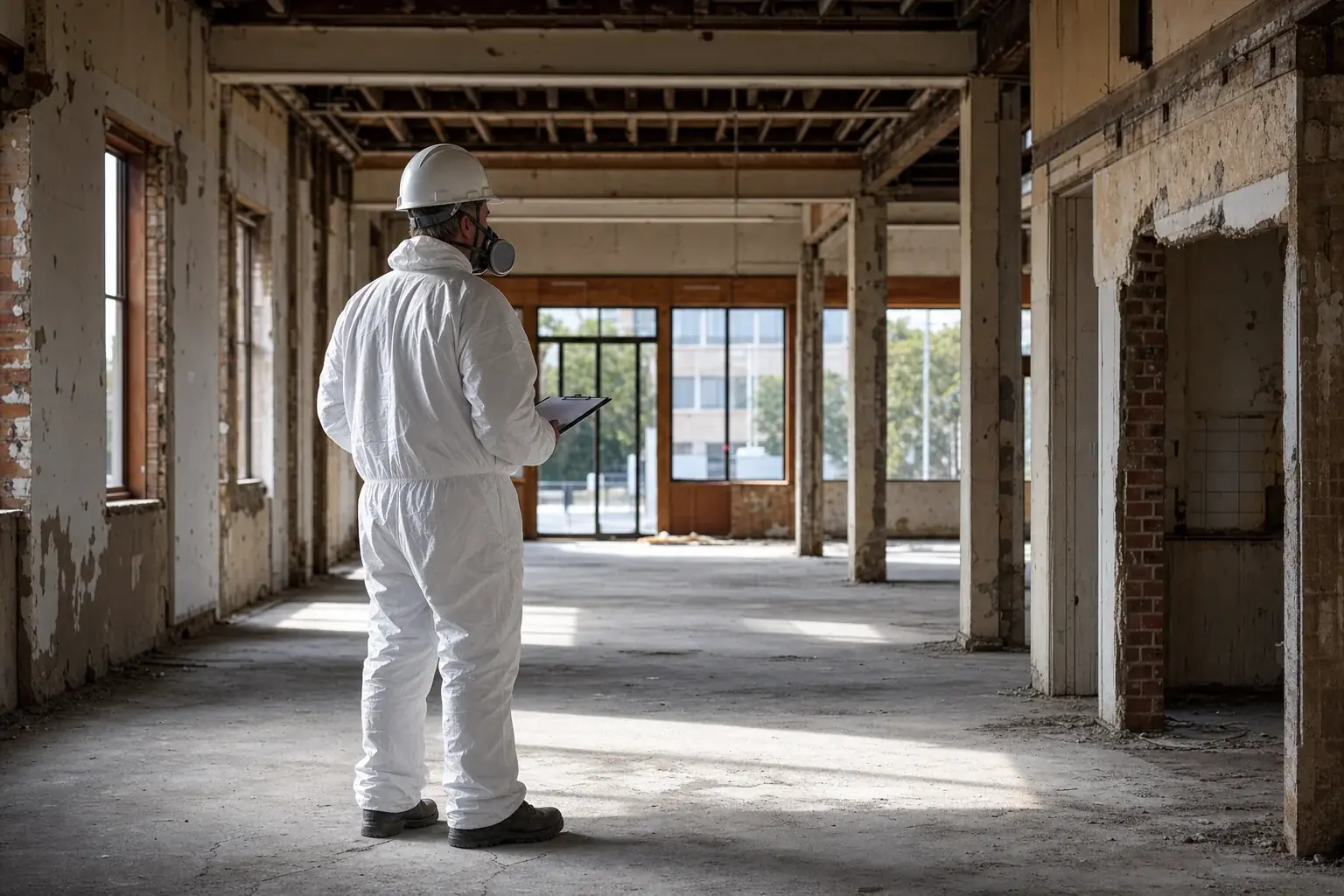
A Licensed Assessor arrives before works begin, sets up calibrated sampling pumps at agreed locations, and records the background baseline before any…
Monitoring continues through the works and clearance phase
Sampling pumps run during the removal activity.
Filters go to the NATA accredited laboratory and the report is delivered
Filters go to the NATA accredited laboratory under chain of custody.
We are available throughout the project for queries
During the monitoring programme, we are available to the site manager, the principal contractor and the licensed removalist for questions about the…

In person
Every sample taken by a licensed assessor
NATA accredited laboratory analysed
NATA accredited laboratory result
Documented
Chain of custody, start to finish
Same-day
Rush results available on request
Common situations
When air monitoring is required or advisable
- 01
During licensed asbestos removal
Running independently alongside the licensed removalist, monitoring confirms that the area stays within limits and produces the written record the…
- 02
In occupied or partially occupied buildings
Where works happen in proximity to people who are not part of the removal activity, monitoring provides documented confirmation that areas outside the…
- 03
Before an area is cleared for reoccupation
Post-works air testing provides measured evidence to support the clearance decision.
- 04
After an unplanned asbestos disturbance
When asbestos has been accidentally disturbed, monitoring after the incident documents whether airborne levels have returned to background before work…
- 05
When principal contractors or insurers require it
Many principal contractors and building managers require independent air monitoring before following trades return to the work area, regardless of the…
- 06
When a neighbouring occupant or tenant has concerns
In multi-occupancy buildings or where works are being carried out near a neighbouring property, monitoring provides documented, measured evidence that…
- 07
For complex or long-duration removal projects
For removal programmes that extend over several days or weeks, continuous or daily monitoring provides an ongoing documented record that conditions in…
Common questions
No. We do not remove asbestos. Air monitoring is an independent measurement service that runs alongside a licensed asbestos removalist to produce a documented record of airborne fibre levels during and after the removal works. The monitoring function and the removal function are kept separate intentionally, and must be performed by different parties.
Class A friable asbestos removal requires monitoring by a licensed assessor as a matter of law. Class B non-friable removal does not carry the same statutory requirement in all cases, but independent monitoring is commercially standard practice on most Perth construction sites regardless of the formal requirement. We can advise on what is appropriate for your specific works and site.
Filters are analysed using phase contrast microscopy, which is the standard method for asbestos air monitoring in Australian occupational hygiene practice. It produces a fibre count per millilitre of air that can be compared directly against the regulatory occupational exposure limit.
Yes. We operate independently of any removal contractor. You can engage us directly to provide monitoring alongside whichever licensed asbestos removalist you or the principal contractor has chosen for the project.
We notify the site promptly so works can be paused, the existing control measures can be reviewed, and the situation can be properly assessed and addressed. The elevated reading, the time it was detected, and the response taken are all documented in the final monitoring report.
The number of sampling locations depends on the size of the containment, the work activities involved, whether the building is occupied outside the work zone, and any specific regulatory or contractual requirements for the project. On a straightforward residential removal, two or three control monitoring locations plus background locations is typical. On a larger commercial site or where occupied areas are adjacent to the work zone, more locations are used to provide representative coverage of all potentially affected areas.
Related services
You might also need
Asbestos Clearance Inspections
Independent clearance inspections and certificates after licensed removal works, so work can safely continue.
Learn moreAsbestos Inspections & Surveys
Residential and commercial inspections that identify and document suspected asbestos-containing materials.
Learn morePost-Fire & Disaster Response
Rapid asbestos assessment for fire, flood and storm-damaged properties for owners, builders and insurers.
Learn more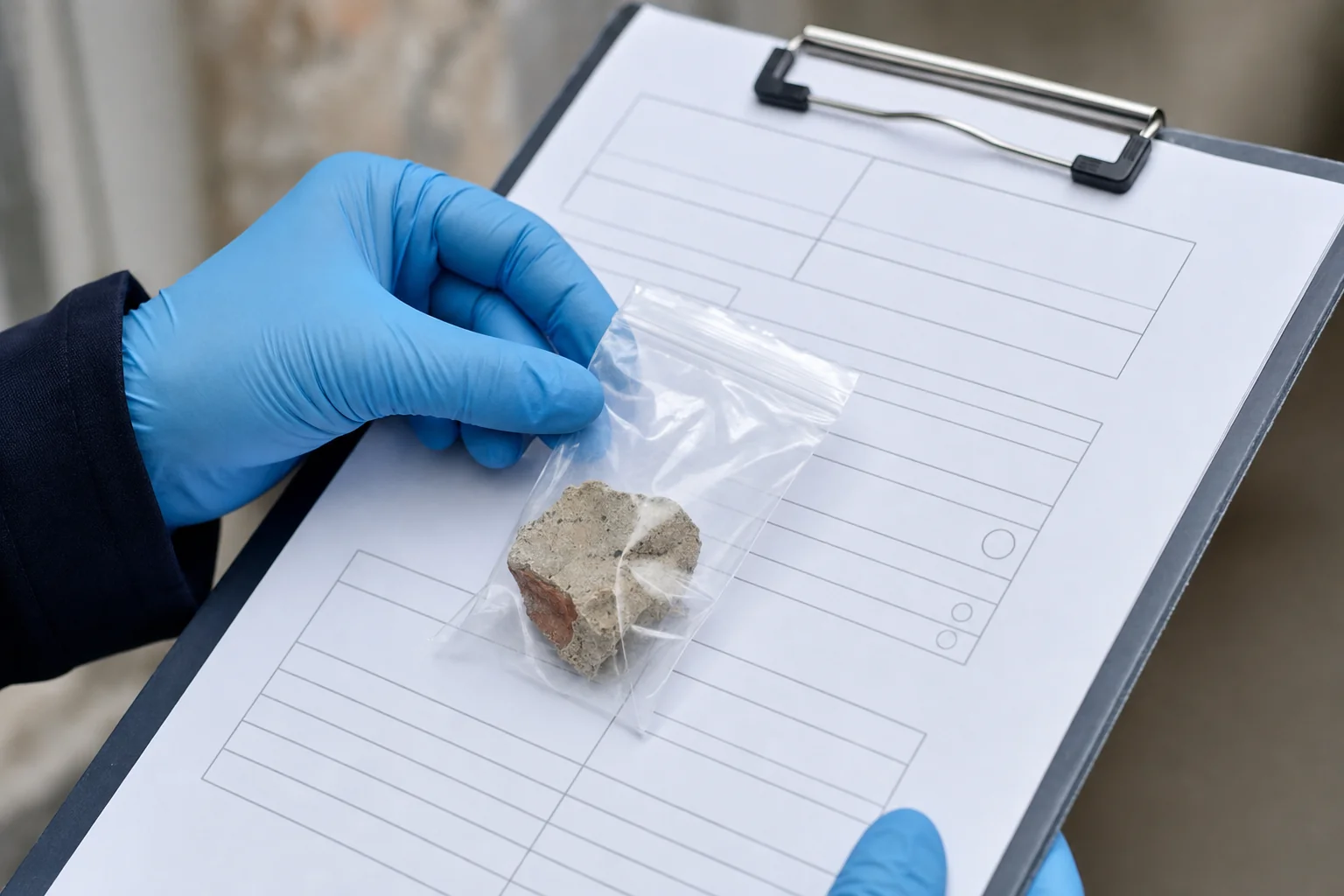
Book asbestos air monitoring
Not sure what you're
looking at?
Don't guess. Book a test with Perth's Licensed Asbestos Assessor and get a written answer you can act on.
(08) 6186 7484Request a test or a quote
Tell us about the property and we will get straight back to you.