
Sampling & NATA accredited laboratory testing
Asbestos Sampling & NATA Accredited Laboratory Testing in Perth
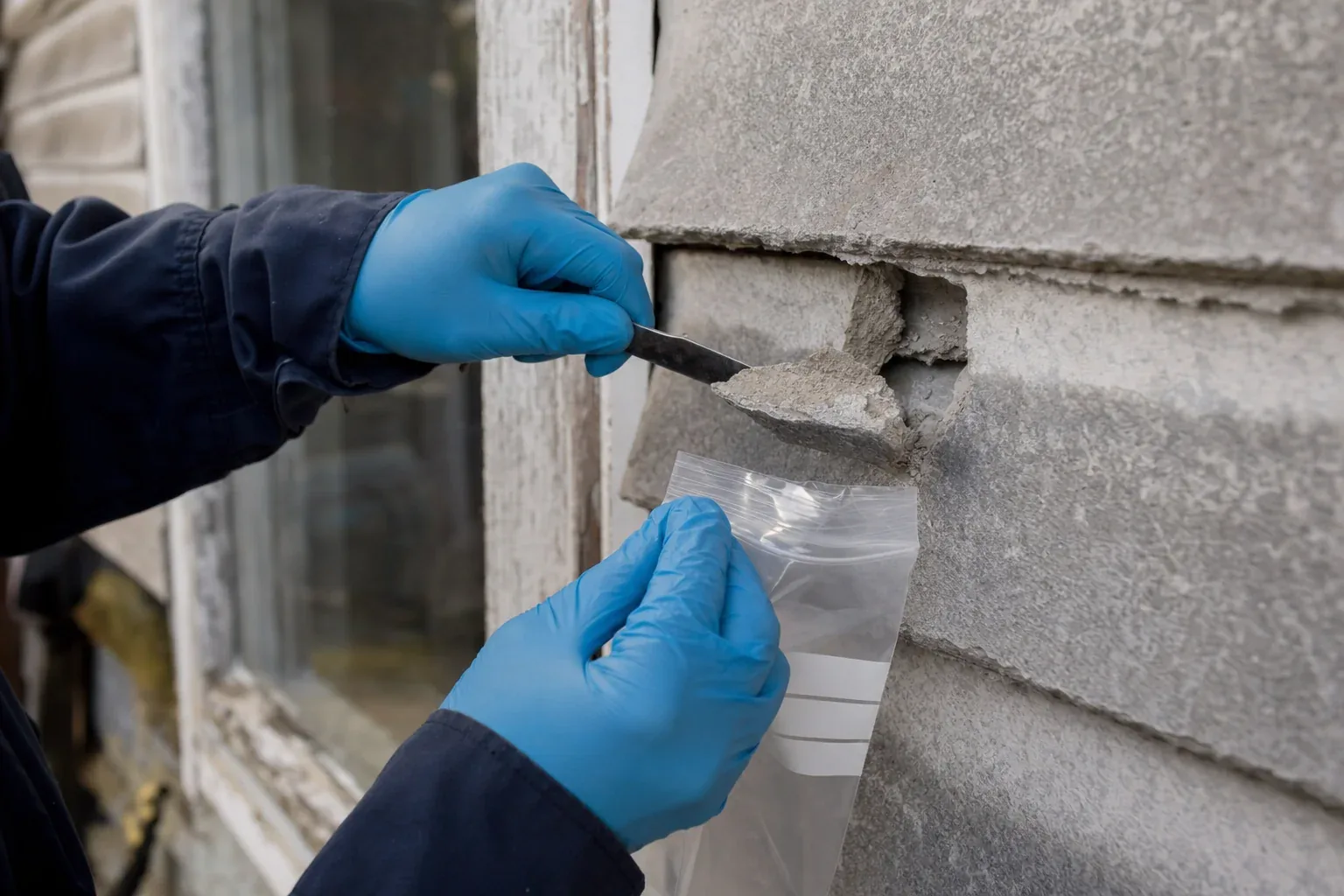
A WA Licensed Asbestos Assessor takes a properly documented sample from your property and has it analysed at a NATA accredited laboratory, so you get an answer you can actually rely on.
(08) 6186 7484From $775for residential surveys
Every sample and all NATA accredited laboratory analysis is included. No per-sample surprises. Many operators quote a low call-out then bill each sample on top, we tell you the full cost up front.
Book this test
Tell us about the property. A Licensed Assessor calls you back, same-day available.
The short version
What asbestos sampling and testing actually involves
Sampling means physically removing a small piece of the suspect material under controlled conditions, sealing it in a properly labelled container, and sending it to a NATA accredited laboratory for analysis under a documented chain of custody. It is the only method that produces a confirmed, scientifically defensible answer about whether a material contains asbestos fibres. Everything else is an opinion.
You cannot identify asbestos by looking at it.
“The only way to know for sure is to test.”
At a glance
Who attends
Licensed Asbestos Assessor (WA)
How it's analysed
NATA accredited laboratory
What you get
A clear written report
Turnaround
Same-day available on request
What you get
What is included

In-person sampling by a Licensed Assessor
A WA Licensed Asbestos Assessor attends, reviews the material in its context, and takes the sample safely using appropriate…

Chain-of-custody documentation
Each sample is sealed on site, assigned a reference number, and tracked from your property to the NATA accredited laboratory so…

NATA accredited laboratory analysis
Samples go to a NATA accredited laboratory for analysis using the standard method for asbestos identification.
Clear written report
You receive a plain-English written report stating whether asbestos was found, where the sample was taken, and what the finding…

Same-day results on request
When a project or a pending trade cannot wait, same-day turnaround is available.

Condition and risk assessment
The assessor notes the material's condition and whether it presents an immediate risk or can be safely managed in place, so you…
Result usable in any professional context
The written report and NATA accredited laboratory result are formatted for direct use by builders, real estate agents, property…
In your report, you receive
- A clear written report confirming whether the sampled material contains asbestos fibres
- Sample location documented with photographs so there is no ambiguity about exactly what was tested
- A chain-of-custody record linking the sample from your property through to the NATA accredited laboratory result
- The NATA accredited laboratory analysis result attached to the written report
- A condition note on the material, including whether it presents an immediate risk or can be managed in place
- Plain-English guidance on what the result means for your renovation, sale or maintenance plans and what to do next
- Confirmation of exactly what was sampled, with the material type and location cross-referenced to the NATA accredited…
- A written explanation of what the result means in your specific context, whether that is a planned renovation, a…
What we look at
Materials we commonly sample and test
Tap any material to see where it turns up and what to watch for. If you are unsure what you are looking at, that is exactly what a sample confirms.
Sampled in personThe most frequently tested material in older Perth homes and sheds. Produced widely from the 1940s through to the late 1980s, fibre cement sheeting was used as external wall cladding, internal linings, wet-area panels, eaves boards and outbuilding walls across the Perth metro and regional WA. Depending on the manufacturer and the year of production it can contain chrysotile, amosite or, in some older products, crocidolite asbestos fibres. A Licensed Assessor can collect a sample from the ceiling surface using appropriate controls that minimise fibre release, so you receive a confirmed NATA accredited laboratory result without creating the risk of uncontrolled fibre release during the sampling process.Condition varies considerably from intact painted sheets that present a lower immediate risk through to weathered, cracked or broken panels that need careful management and risk assessment.
Spray-on and hand-trowelled textured ceiling finishes applied in homes built or renovated before the 2003 ban frequently contain chrysotile asbestos. Homeowners regularly underestimate this risk because the material looks like ordinary ceiling paint or plaster and is not distinguishable from asbestos-free products by appearance alone. Sanding, scraping or drilling through a textured asbestos ceiling without testing first is one of the most common ways fibres are unintentionally released inside a home during renovation work, and the fibres themselves are not visible to the naked eye. Where the ceiling surface is confirmed asbestos-containing, the management approach in the report takes into account whether the surface is intact and painted, whether there are signs of previous damage or water staining, and what the planned renovation will require.
Vinyl floor tiles manufactured before the 2003 ban and the black adhesive backing sheet bonded beneath them can contain asbestos. The backing is particularly common in older bathroom, laundry and kitchen floor assemblies across Perth. Lifting old vinyl without testing first is a recognised exposure pathway during bathroom and kitchen renovations, and it is one of the most common reasons tradespeople stop work on site and contact us to arrange testing before they continue with the project. If the tiles or their adhesive are confirmed asbestos-containing, a licensed asbestos removalist must handle the material before renovation work proceeds, and the scope of the renovation must be planned around the need for that specialist removal.
The boards forming the underside of eaves and soffits on homes built from the 1950s through to the early 1980s are very frequently fibre cement that can contain asbestos. These boards often show weathering, cracking or paint loss over the decades, which changes the risk profile of the material and the management priority assigned to it. Drilling, cutting or replacing eaves boards during roof, gutter or fascia work. Confirming the material before the eaves replacement work starts also removes the risk of a costly mid-project stop when the tradesperson encounters damage that raises concerns and leads to a mandatory work stoppage under WHS obligations. disturbs these materials directly, making testing before any eaves-related work begins the straightforward and appropriate step.Eaves board assessment includes checking for paint loss, cracking, corner damage and whether the boards show signs of water ingress from blocked gutters above, since water damage can change the condition rating of the material significantly.
Hot-water pipes, boilers, steam lines and older heating duct systems were commonly wrapped in asbestos-containing insulation blanket, tape or sectional insulation before the 1980s. With age this material often becomes brittle and friable, meaning it crumbles and releases fibres when touched, cut or even vibrated by nearby work activity. Friable asbestos insulation of this type presents a higher risk profile. Where pipe lagging is found in a deteriorated or friable condition, the assessor documents its location, estimated extent and current condition as part of the written report alongside the NATA accredited laboratory result, providing a complete record for managing the material. than the non-friable sheet materials more commonly encountered in residential properties, and its confirmation by testing is important before any works proceed near it.
Corrugated asbestos cement sheeting was widely used for roofing, fencing and outbuilding construction across WA from the 1950s through to the 1980s, and it remains in place on a significant number of older residential, rural and light industrial properties across the state. Weathered, cracked or broken corrugated sheets can release fibres when disturbed and are regularly found during roofing assessments, fence replacement projects and property inspections across the Perth metropolitan area and regional WA. Testing is the only way to confirm a corrugated product as asbestos-containing or asbestos-free. Visual identification of corrugated products is not reliable because modern asbestos-free fibre cement sheets can appear identical to older asbestos-containing versions, and the only way to distinguish between them is through NATA accredited laboratory analysis of a properly taken sample.
Textured exterior render applied to brick and block walls before the 2003 ban can contain asbestos fibres mixed through the render compound. This material is encountered frequently on older commercial and residential buildings in the Perth metropolitan area and is often identified during site assessments before external painting, repair or remediation works begin.
Simple process
How it works
Tell us what you have found and where it is
Call (08) 6186 7484 or book online. Describe the material, where it is in the property, what it looks like, and what work you are planning. We confirm…
The Licensed Assessor attends your property
A Licensed Asbestos Assessor arrives, reviews the material in context, takes a properly documented sample using appropriate controls to limit fibre…
The sample is sealed, logged and sent to the NATA accredited laboratory
The sample is sealed immediately on site, assigned a chain-of-custody reference number, and dispatched to the NATA accredited laboratory.
Your written report is delivered
We deliver the written report with the NATA accredited laboratory result attached.
We follow up if you have questions about the result
After the written report is delivered, we are available by phone to discuss the findings, explain what the result means in your specific context, and…

In person
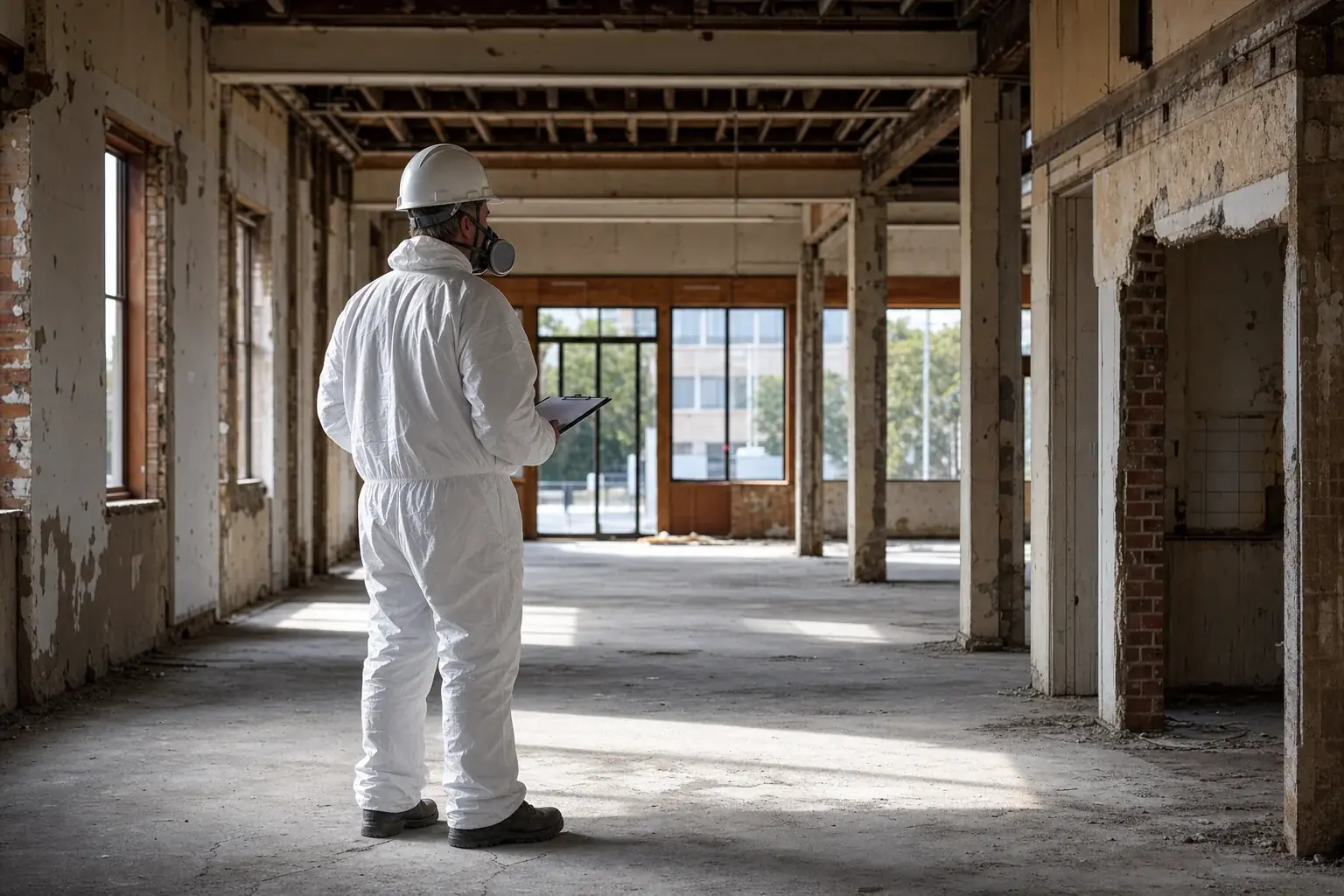
Every sample taken by a licensed assessor
NATA accredited laboratory analysed
NATA accredited laboratory result
Documented
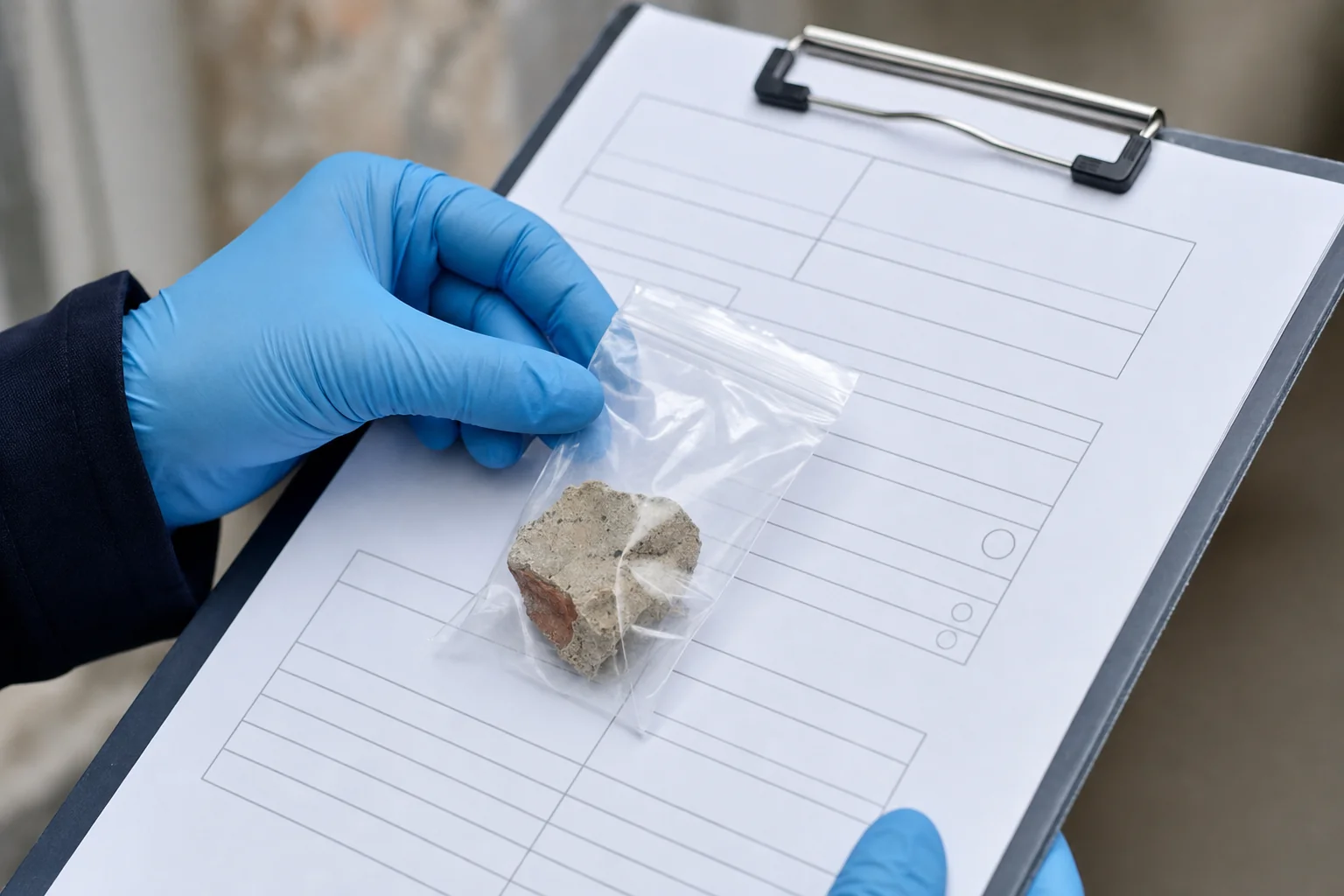
Chain of custody, start to finish
Same-day
Rush results available on request
Common situations
When you need a sample tested
- 01
Before any renovation work on an older property
Cutting, drilling, grinding or sanding a material that turns out to contain asbestos releases fibres you cannot see.
- 02
Before demolition
Demolition disturbs every material in a building simultaneously and without the targeted controls that planned removal work requires.
- 03
When buying or selling a property
A test gives buyers, sellers and agents a documented answer rather than an assumption.
- 04
When you have found a suspect material
If a material looks like old sheeting, textured coating, vinyl tile or any product from before the 2003 ban that you cannot identify with confidence…
- 05
When a tradesperson has stopped work
Tradespeople who suspect they have encountered asbestos are required under WHS legislation to stop work until the material is confirmed or excluded.
- 06
When a building permit requires confirmation
Some local councils and building surveyors require a written confirmation that suspected asbestos-containing materials have been tested before a…
- 07
When a lender or insurer requires documented confirmation
Some lenders and building insurers ask for written confirmation about asbestos content when considering a loan or policy application for an older…
Common questions
Standard turnaround from the NATA accredited laboratory is typically within a few business days, and same-day results are available when the job cannot wait for a standard result. The exact timeframe depends on the NATA accredited laboratory queue and is confirmed when you book, so there are no surprises while work is on hold waiting for the answer The NATA accredited laboratory turn around for the analysis is distinct from the time taken to prepare and dispatch the written report, and we confirm both timeframes when you book so you know exactly when to expect the complete result.
Disturbing a suspect material yourself without appropriate controls can release asbestos fibres into the air inside your home. A Licensed Assessor takes the sample safely and documents it with a proper chain of custody, which is what makes the result reliable, legally defensible and usable by builders, insurers and regulators. A self-collected sample without a documented chain of custody does not carry the same weight when it matters A Licensed Assessor is required to take the sample under appropriate controls precisely because disturbing an asbestos-containing material during sampling can release fibres, and the assessor's training covers how to minimise that risk during the collection process.
Only a small representative piece of the material is needed for NATA accredited laboratory analysis. The assessor removes it carefully to minimise disturbance to the surrounding material, and seals the sample site with appropriate tape or patching compound after the sample has been taken and sealed The sampling site is made good after the sample is taken, so the disruption to the material is minimal and the finished result is not visually obvious from a normal viewing distance.
We explain clearly what the result means for your specific situation. Whether the material can remain in place with appropriate management, needs to be encapsulated, or must be removed before your planned works proceed, the report gives you the documented starting point. Removal, where required, must be carried out by a licensed asbestos removalist, which is a separate party to us The report that accompanies a confirmed positive result includes practical information about what type of licensed asbestos removalist the material requires and what the removal process generally involves, so you have context for the next conversation.
Yes. Multiple samples from different materials can be collected during a single visit, which is more efficient and cost-effective than separate visits for each one. When you call, let us know how many materials you want tested so we can plan the visit properly When you call to book, give us the approximate count of materials you want tested and we will confirm whether all of them can be covered in a single visit or whether more than one visit will be more efficient. and give you an accurate quote for the work.
Whether asbestos testing costs are covered by a home or landlord insurance policy depends on the specific terms of the policy and the circumstances of the assessment. For insurance claim purposes, a written report from a Licensed Assessor with a documented chain-of-custody result is the form of evidence most likely to be accepted by an insurer as part of a claim for damage-related testing costs. Check the policy terms or ask your broker, and we can provide the report format needed to support a claim.
Related services
You might also need
Asbestos Inspections & Surveys
Residential and commercial inspections that identify and document suspected asbestos-containing materials.
Learn moreAsbestos Clearance Inspections
Independent clearance inspections and certificates after licensed removal works, so work can safely continue.
Learn moreSoil & Land Asbestos Testing
Soil and land sampling to check fill and ground for asbestos before building, subdividing or landscaping.
Learn moreBook asbestos sampling & nata accredited laboratory testing
Not sure what you're
looking at?
Don't guess. Book a test with Perth's Licensed Asbestos Assessor and get a written answer you can act on.
(08) 6186 7484Request a test or a quote
Tell us about the property and we will get straight back to you.