AI overview
An asbestos clearance certificate is an independent inspector's written confirmation that an area is safe for normal use after asbestos removal. The certificate must come from an independent Licensed Assessor, not the removalist who did the work, so the sign-off is impartial. It is typically needed after removal works so trades and occupants can safely return to the area.
Key takeaways
- A clearance certificate confirms an area is safe after removal.
- It must come from an independent assessor, not the removalist.
- It follows the removal, it is not the removal itself.
- A visual inspection checks the area is clean and complete.
- Air monitoring may be used to confirm fibre levels are safe.
- It lets trades and occupants return to the area safely.
- Booking clearance early keeps trades from waiting on the site.
Asbestos removal is only half the job. The other half is proving the area is safe again.
That proof is the clearance certificate. Here is what it is, who issues it, and when you need one.
What it is
A clearance certificate is a written confirmation that an area is safe for normal use after asbestos removal. It is issued after an independent inspection.
It records that the removal work looks complete, the area is clean, and there is no visible asbestos debris left behind.
Clearance follows removal
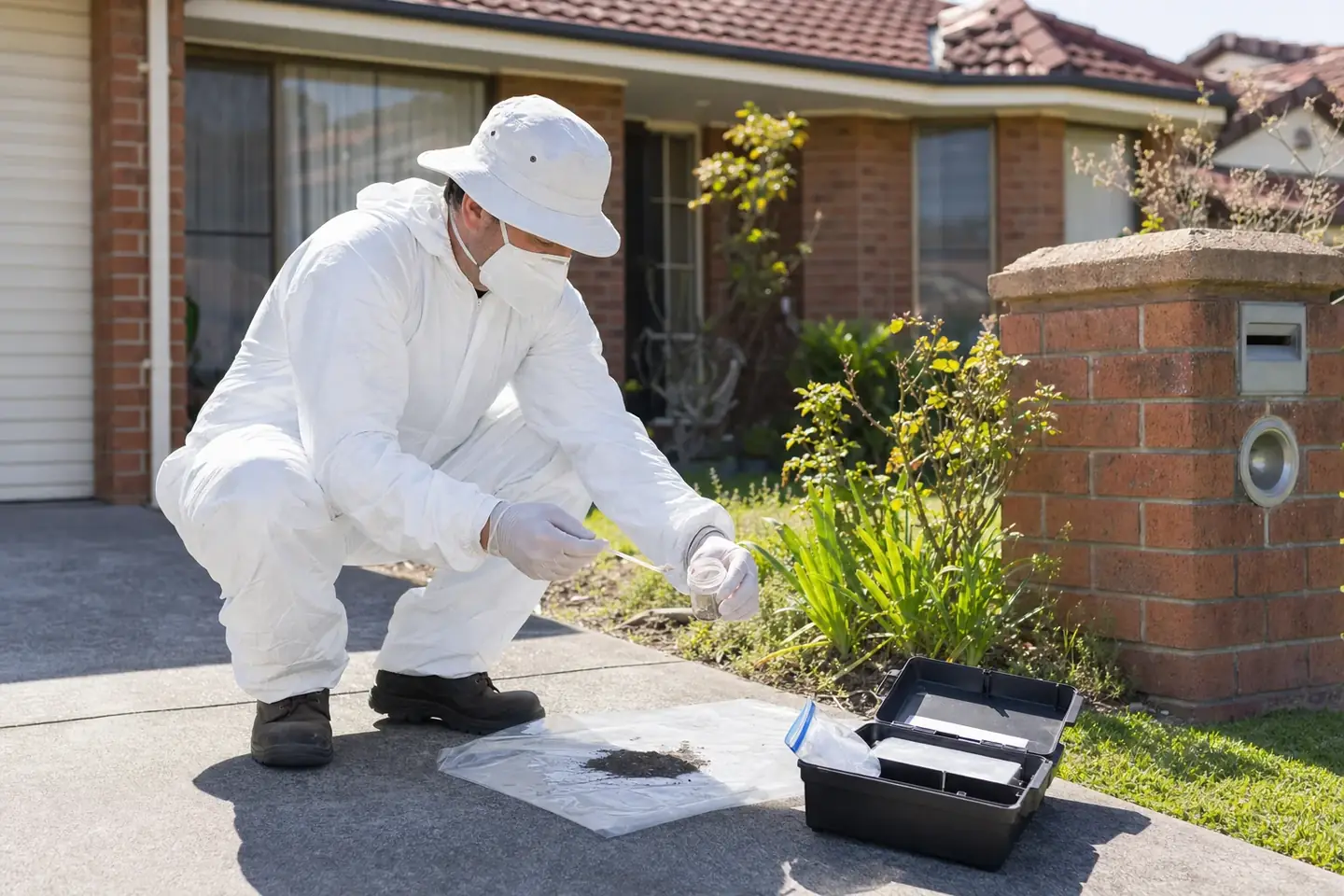
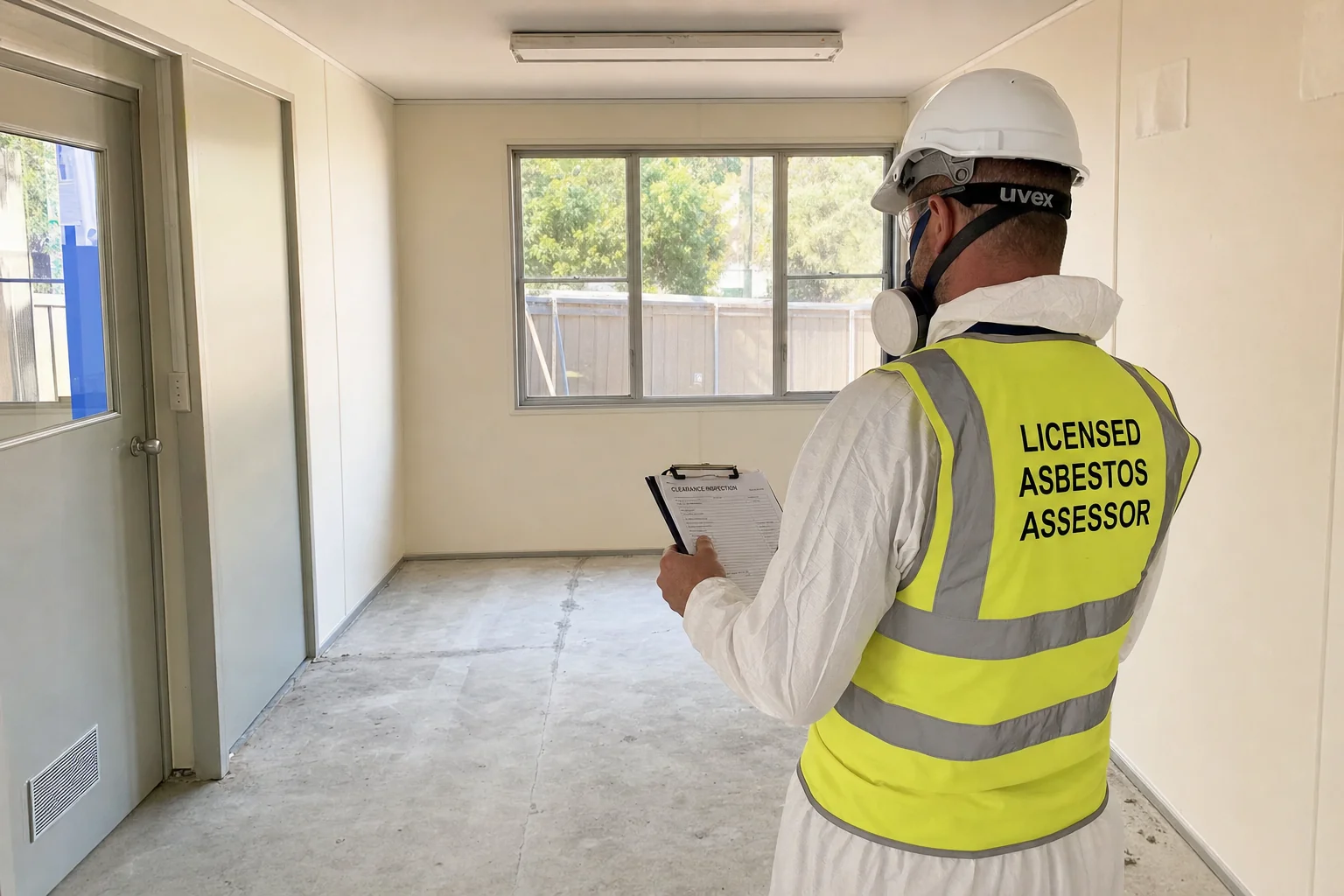
A clearance certificate is issued after a licensed asbestos removalist has finished. We do not remove asbestos. We independently inspect the cleared area and issue the clearance.
Why it must be independent
The clearance should not come from the same party that did the removal. Independence is the whole point of the sign-off.
The party who did the removal should not be the party who signs it off as safe. A clearance means something because someone independent inspected it.
A Licensed Assessor, separate from the removalist, inspects the area and issues the certificate. That separation is what gives it weight.
Independence is a safeguard, not a formality
A separate assessor has no stake in declaring the job finished. That impartial check is exactly what an occupant, a builder or an insurer relies on before people move back into the area.
When you need one
A clearance is generally needed once asbestos has been removed and people need to return to the area. These are common situations.
- After asbestos removal in a home, before the space is used again.
- On a commercial or strata site, before trades resume work in the area.
- As part of a staged renovation, so following works can proceed safely.
- Where a removal control plan or the site manager requires clearance before re-entry.
What the inspection involves
- Step 01
Visual inspection
A Licensed Assessor checks the cleared area for any visible asbestos debris or residue.
- Step 02
Air monitoring where needed
On-site air monitoring can measure airborne fibre levels to confirm the area is safe.
- Step 03
Certificate issued
If the area passes, a clearance certificate is issued so it can be reoccupied.
Book the clearance before removal finishes
Line up your clearance inspection so it can happen as soon as the removalist is done. It keeps the site moving and avoids delaying the trades waiting to return.
Clearance vs testing
Clearance and testing are different jobs at different stages. It helps to know which one you need.
| Service | When | What it answers |
|---|---|---|
| Testing | Before work | Does this material contain asbestos? |
| Clearance | After removal | Is the area now safe to reoccupy? |
- The removal area looks complete, with no visible asbestos debris or residue.
- Where used, air monitoring confirms airborne fibre levels are within safe limits.
- The assessor is independent of the removalist who did the work.
- The written certificate records the area is safe to reoccupy.
Booking a clearance
If removal is planned or under way, arrange an independent clearance inspection so the area can be signed off and reused safely.
Call (08) 6186 7484 to book a clearance inspection with a Licensed Assessor.
Not sure about a material in your property?
A Licensed Assessor can take a sample and give you a documented answer.
Frequently asked questions
It is a written confirmation from an independent assessor that an area is safe for normal use after asbestos removal. It records that the work looks complete, the area is clean and no visible asbestos debris remains.
An independent Licensed Assessor, separate from the removalist who did the work. That independence is what makes the sign-off meaningful, so the party who removed the asbestos does not clear their own work.
Generally after asbestos has been removed and people need to return to the area, whether in a home, a commercial site or a staged renovation. It confirms the area is safe to reoccupy.
No. Removal is done by a licensed asbestos removalist. We independently inspect the cleared area, carry out air monitoring where needed, and issue the clearance certificate.
If visible debris remains or air monitoring shows fibre levels are not yet safe, a certificate is not issued. The removalist addresses the outstanding items, and the area is inspected again before it can be signed off and reoccupied.
Line it up so it can happen as soon as the removalist finishes. Booking early keeps the site moving and avoids delaying the trades and occupants waiting to return to the area.
Related services
Written and reviewed by
Perth Asbestos Testing, Licensed Asbestos Assessor (WA)
This article is written and reviewed by a WA Licensed Asbestos Assessor who attends properties across Perth metro and regional WA in person. Information here is general guidance. For a definite answer about your property, the material needs to be sampled and tested.
(08) 6186 7484Topics covered