AI overview
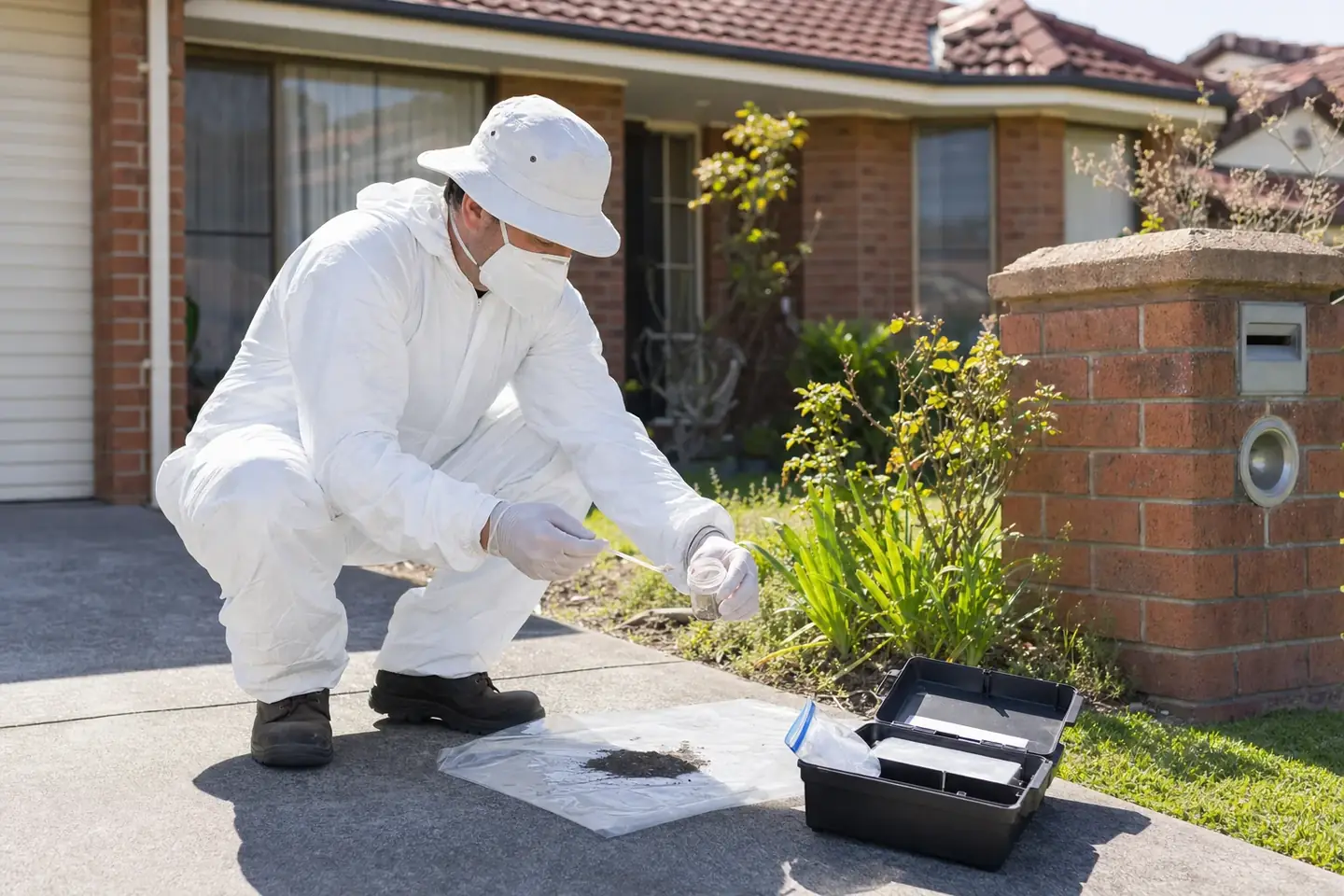
DIY asbestos test kits ask you to take your own sample and post it to a NATA accredited laboratory, which puts the riskiest step in untrained hands. The danger with DIY kits is the sampling, not the NATA accredited laboratory, because disturbing a suspect material without controls can release fibres and an unrepresentative sample can give a misleading result. A Licensed Assessor takes the sample safely and gives you a documented result that holds up for buyers, builders and insurers.
Key takeaways
- The risky part of testing is taking the sample, not the NATA accredited laboratory work.
- DIY sampling can release fibres and expose you and your household.
- A poorly taken sample can give an unreliable result.
- A Licensed Assessor samples under controlled conditions.
- Documented, chain-of-custody results carry more weight.
- For sales, insurance or works, a professional result holds up.
- The NATA accredited laboratory can only analyse the sample it is given, good or bad.
A DIY asbestos kit looks like an easy win. Order online, snip a piece off, post it away, wait for a result.
The catch is that the cheapest-looking step is also the most dangerous. Let us look at what actually holds up.
How DIY kits work
A DIY kit typically supplies a bag and instructions. You take the sample yourself and mail it to a NATA accredited laboratory for analysis.
The NATA accredited laboratory analysis is the same science either way. The difference is who takes the sample and how.
The sampling is the hazard
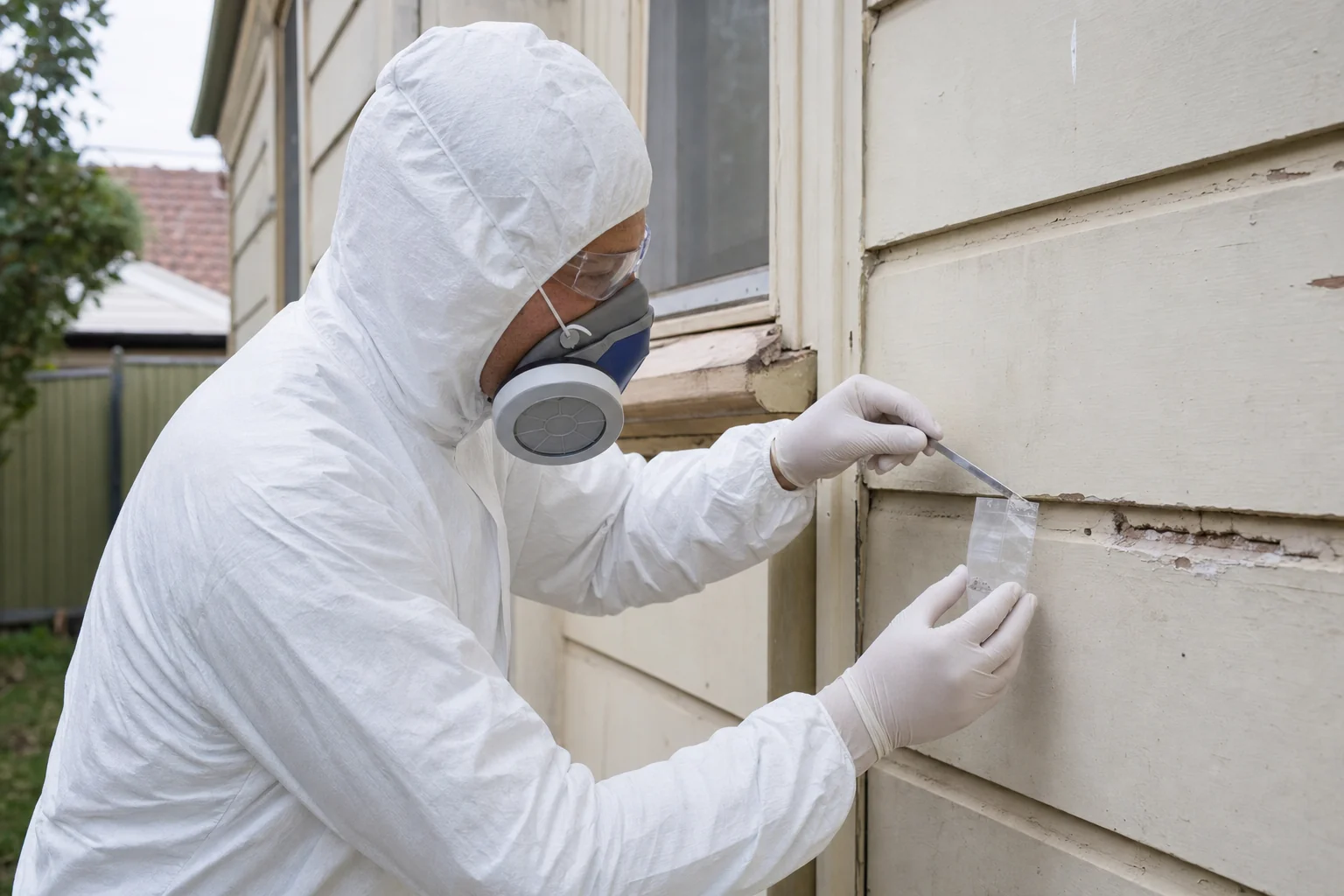
Cutting or snapping a suspect material to get a piece is exactly what releases fibres. A DIY kit hands you the most hazardous step with none of the controls a Licensed Assessor uses.
Where the real risk sits
There are two risks with DIY sampling, and both matter. One is safety, the other is reliability.
- Exposure: disturbing the material without controls can release fibres for you and your household to breathe.
- Poor sampling: a piece taken from the wrong spot or the wrong layer can misrepresent the material.
- No chain-of-custody: a self-taken sample has no independent record of where and how it was collected.
- Contamination: an unsealed or mishandled sample can be compromised before it reaches the NATA accredited laboratory.
The NATA accredited laboratory can only analyse what you send it. If the sample is unsafe to take or badly taken, the number on the report cannot fix that.
DIY vs assessor side by side
| Consideration | DIY kit | Licensed Assessor |
|---|---|---|
| Who samples | You, untrained | A Licensed Assessor (WA) |
| Sampling controls | None supplied | Controlled, low-disturbance method |
| Chain-of-custody | None | Documented from sample to NATA accredited laboratory |
| Reliability | Depends on your technique | Representative, properly taken |
| Holds up for third parties | Often questioned | Documented and defensible |
When a documented result matters
For a private curiosity, a kit might feel enough. But most people testing for asbestos have a decision riding on it.
Buying
A documented result for a property purchase
Insurance
A defensible basis for a claim
Works
A reliable result before a build or reno
In those situations, a self-taken sample with no chain-of-custody is easy to challenge. A documented result from a Licensed Assessor is not.
The verdict
DIY kits move the hazard to you and drop the paperwork that makes a result stand up. The NATA accredited laboratory step is fine, the sampling step is where it falls down.
If the result has to hold up, or you would rather not disturb a suspect material yourself, use a Licensed Assessor. Call (08) 6186 7484 to book a properly documented test.
Is the NATA accredited laboratory in a DIY kit the same as a professional one?
It can be a legitimate NATA accredited laboratory, and the analysis follows the same science. The weakness is not the NATA accredited laboratory, it is that you take the sample yourself with no controls and no chain-of-custody, so a good NATA accredited laboratory still receives a risky, unverified sample.
Can I use a DIY result for a property sale?
A self-taken result with no chain-of-custody is easy for a buyer, builder or insurer to question. For anything with a decision riding on it, a documented result from a Licensed Assessor is far harder to challenge.
Not sure about a material in your property?
A Licensed Assessor can take a sample and give you a documented answer.
Frequently asked questions
The NATA accredited laboratory analysis can be accurate, but the result is only as good as the sample. A self-taken sample from the wrong spot or layer can misrepresent the material, and there is no chain-of-custody to back it up.
It can be. Cutting or snapping a suspect material to collect a piece is the exact action that releases fibres. A Licensed Assessor uses controlled, low-disturbance methods to take the sample safely.
Chain-of-custody is an independent record of where and how a sample was taken and handled. It makes a result defensible for a property sale, an insurer or a builder, which a self-taken sample cannot offer.
Any time the result matters to someone else, or you would rather not disturb the material yourself. For property sales, insurance, renovations and demolition, a documented professional result holds up.
They can look cheaper on the label, but they leave out the safe sampling and the paperwork that make a result useful. If a self-taken sample is unsafe to collect or gets challenged later, the true cost is higher than a properly documented test.
A Licensed Assessor uses low-disturbance methods to take a representative piece, seals it, and records a chain-of-custody from the sample point to the NATA accredited laboratory. Those controls protect your household during sampling and make the result defensible afterwards.
Related services
Written and reviewed by
Perth Asbestos Testing, Licensed Asbestos Assessor (WA)
This article is written and reviewed by a WA Licensed Asbestos Assessor who attends properties across Perth metro and regional WA in person. Information here is general guidance. For a definite answer about your property, the material needs to be sampled and tested.
(08) 6186 7484Topics covered