AI overview
Textured and popcorn ceilings installed in Perth homes before the 2003 national asbestos ban can contain asbestos in the stippled coating itself. You cannot confirm asbestos by sight, so a NATA accredited laboratory test on a properly taken sample is the only reliable answer. Leave the ceiling undisturbed and arrange sampling before you sand, scrape or drill it.
Key takeaways
- Textured coatings applied before the 2003 ban may contain asbestos fibres.
- Popcorn, stipple and swirl finishes all fall under the same testing question.
- You cannot tell if a ceiling is asbestos by colour, age or texture alone.
- Sanding or scraping a textured ceiling can release fibres, so leave it intact.
- A small sample analysed at a NATA accredited laboratory gives a definite answer.
- A WA Licensed Assessor takes the sample under proper control, not a DIY scrape.
- Testing first lets you plan any painting, repair or removal work safely.
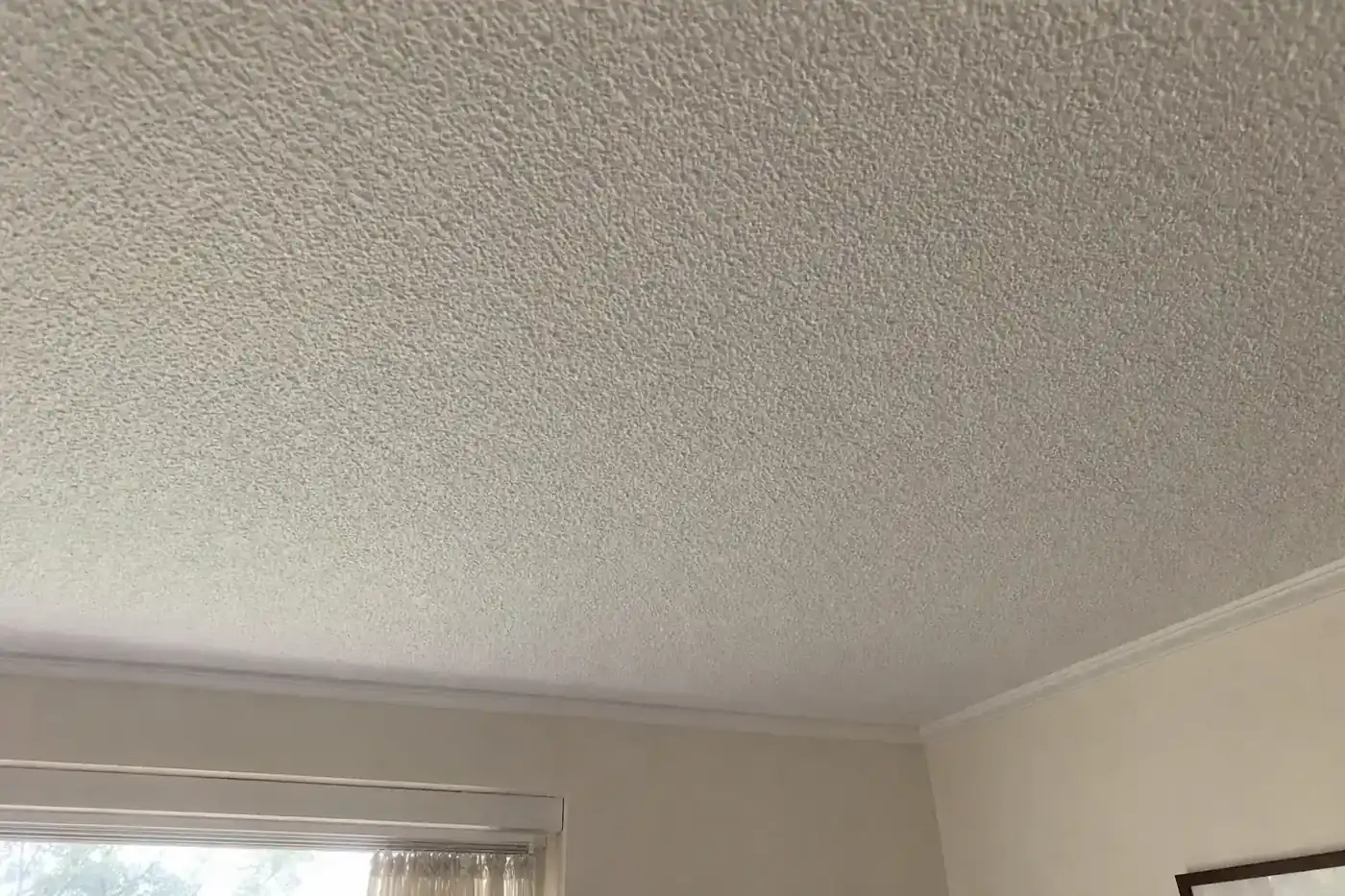
Plenty of Perth homes have a ceiling with a bumpy, stippled finish. It goes by a few names: textured, popcorn, stipple or swirl. In an older home, that finish raises a fair question about asbestos.
This guide explains why those ceilings are worth checking, why you cannot judge the risk by eye, and how a proper sample settles it. We test, sample and inspect. We do not remove.
What textured ceilings are
A textured ceiling is a plaster or coating finish applied to create a raised, uneven surface. It was popular for decades because it hid joins and imperfections and needed less finishing work.
You will see it in homes across the Perth metro, often in living areas, hallways and bedrooms. The look ranges from a fine stipple to a heavy popcorn pattern.
Common names for the same finish
- Popcorn ceiling: a heavy, lumpy finish that looks like popcorn.
- Stipple ceiling: a finer, spiky texture from a stippling brush or roller.
- Swirl or comb: a patterned finish worked into the wet coating.
- Textured coating: the general term for any raised decorative ceiling finish.
Why they can contain asbestos
Asbestos fibres were added to many building materials for strength, fire resistance and workability. Some textured ceiling coatings were among them.
Australia phased out asbestos over many years and introduced a full national ban in 2003. A home built or renovated before that date may have textured coatings from the era when asbestos was still in use.
Age is a signal, not proof
A pre-2003 home is a reason to be cautious, not a diagnosis. A newer textured ceiling can be asbestos free, and an older one might not contain it at all. Only a NATA accredited laboratory test on a real sample confirms either way.
Why you cannot tell by looking
Asbestos fibres are microscopic. Once they are bound into a plaster coating, they are invisible to the eye. Two ceilings that look identical can have completely different results.
No colour, no texture and no age can tell you whether a ceiling contains asbestos. The fibres are microscopic, so the coating has to be sampled and analysed.
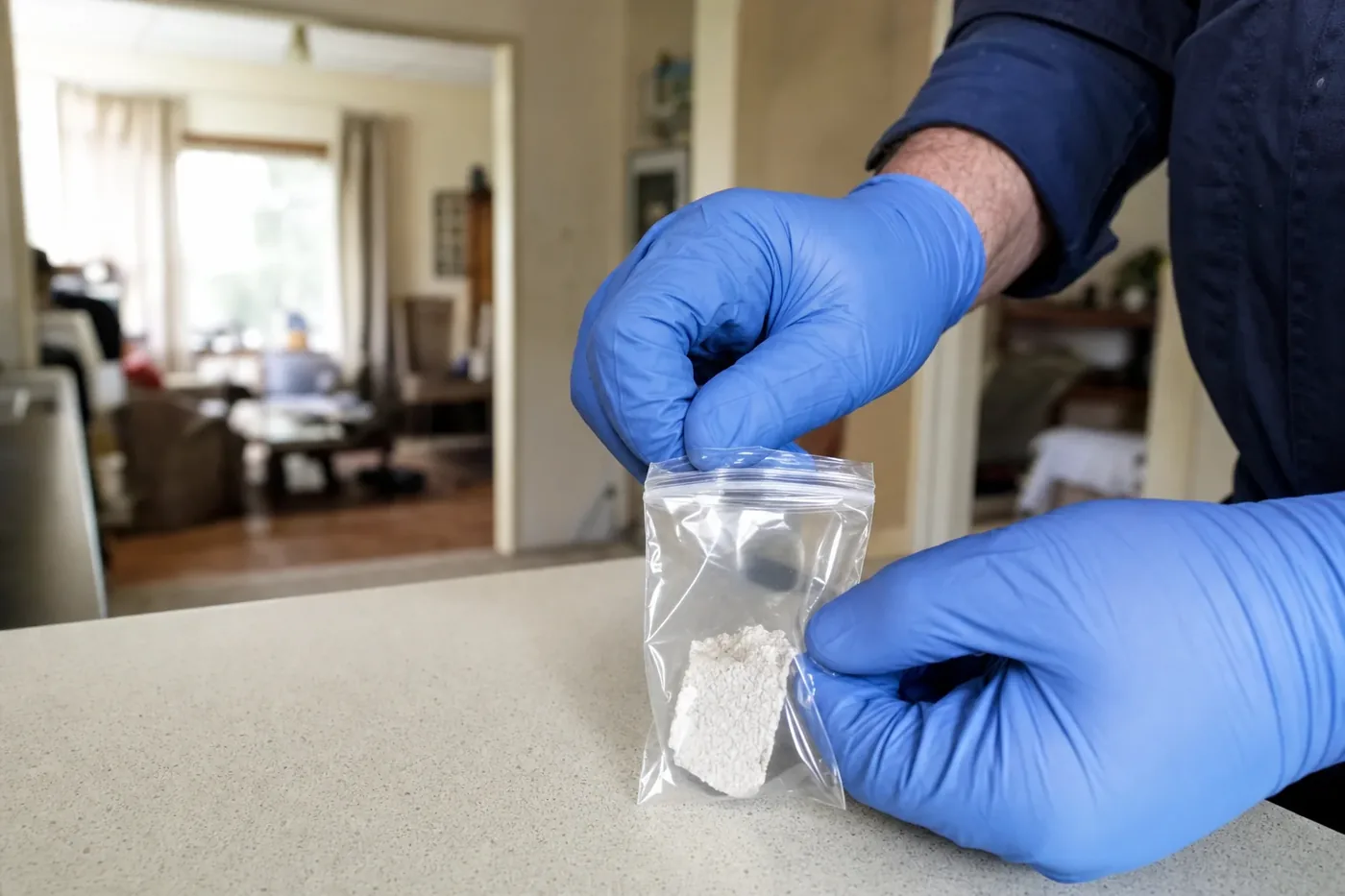
Home test kits and internet photos cannot give you a safe answer either. The only reliable method is a sample taken under control and analysed under a microscope at a NATA accredited laboratory.
2003
Year of the full national asbestos ban
Microscopic
Fibres are invisible to the naked eye
NATA accredited laboratory test
The only reliable way to confirm asbestos
When you should test
If the ceiling is sound and you are leaving it alone, undisturbed asbestos in good condition is generally stable. The risk comes when the material is disturbed.
Test before any work that could break the surface. That is when fibres can be released into the air.
- 1Before sanding or scraping a textured ceiling to smooth or remove it.
- 2Before drilling for a light fitting, fan, cornice or ceiling rose.
- 3Before renovating a room where the ceiling will be touched or replaced.
- 4After water damage that has cracked, stained or crumbled the coating.
- 5Before buying or selling, if the ceiling age and condition raise a question.
Leave it intact until you know
Do not sand, scrape, water-blast or dry-brush a suspect textured ceiling to satisfy your curiosity. Leaving it undisturbed keeps any fibres locked in place until a controlled sample gives you a clear answer.
How testing works
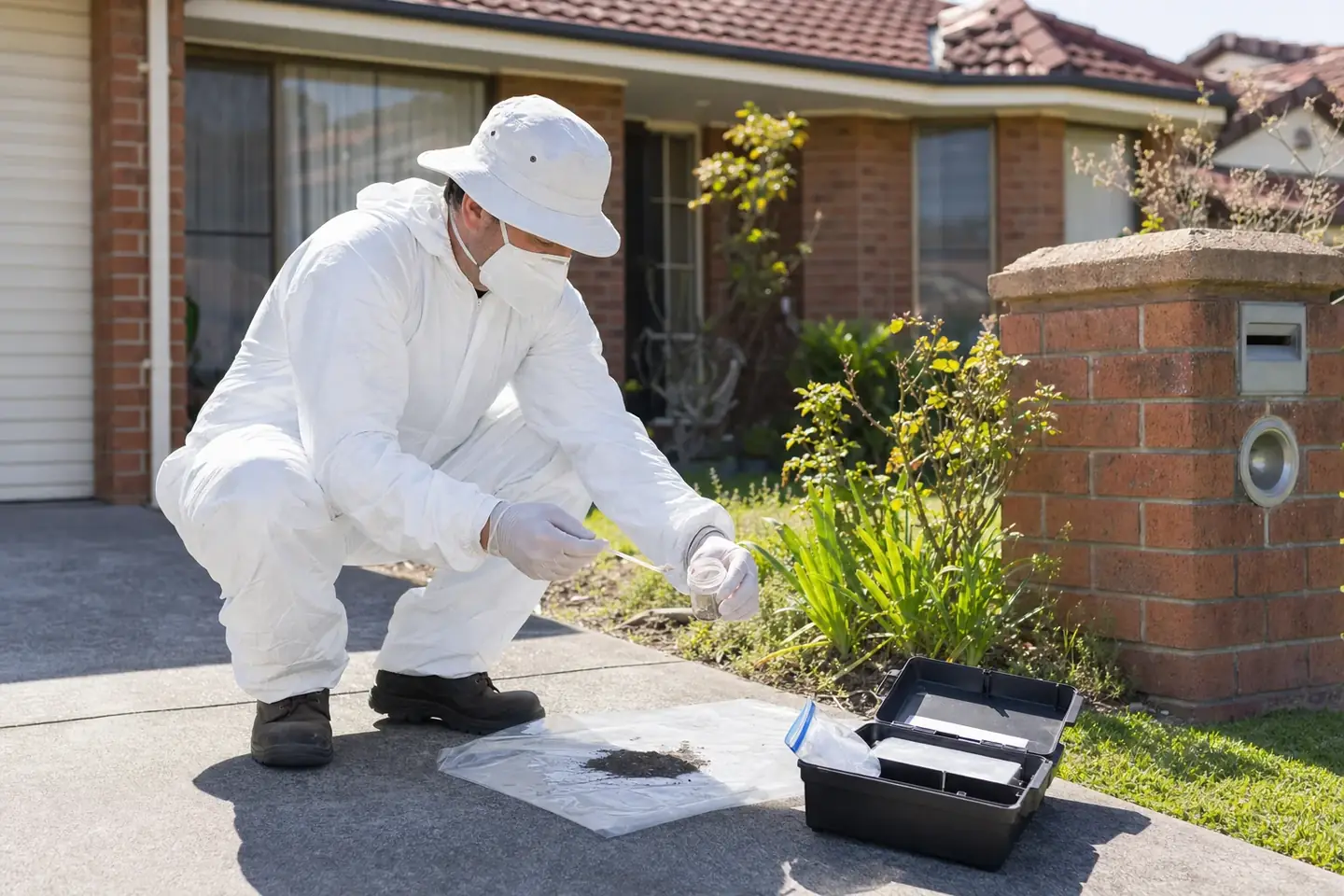
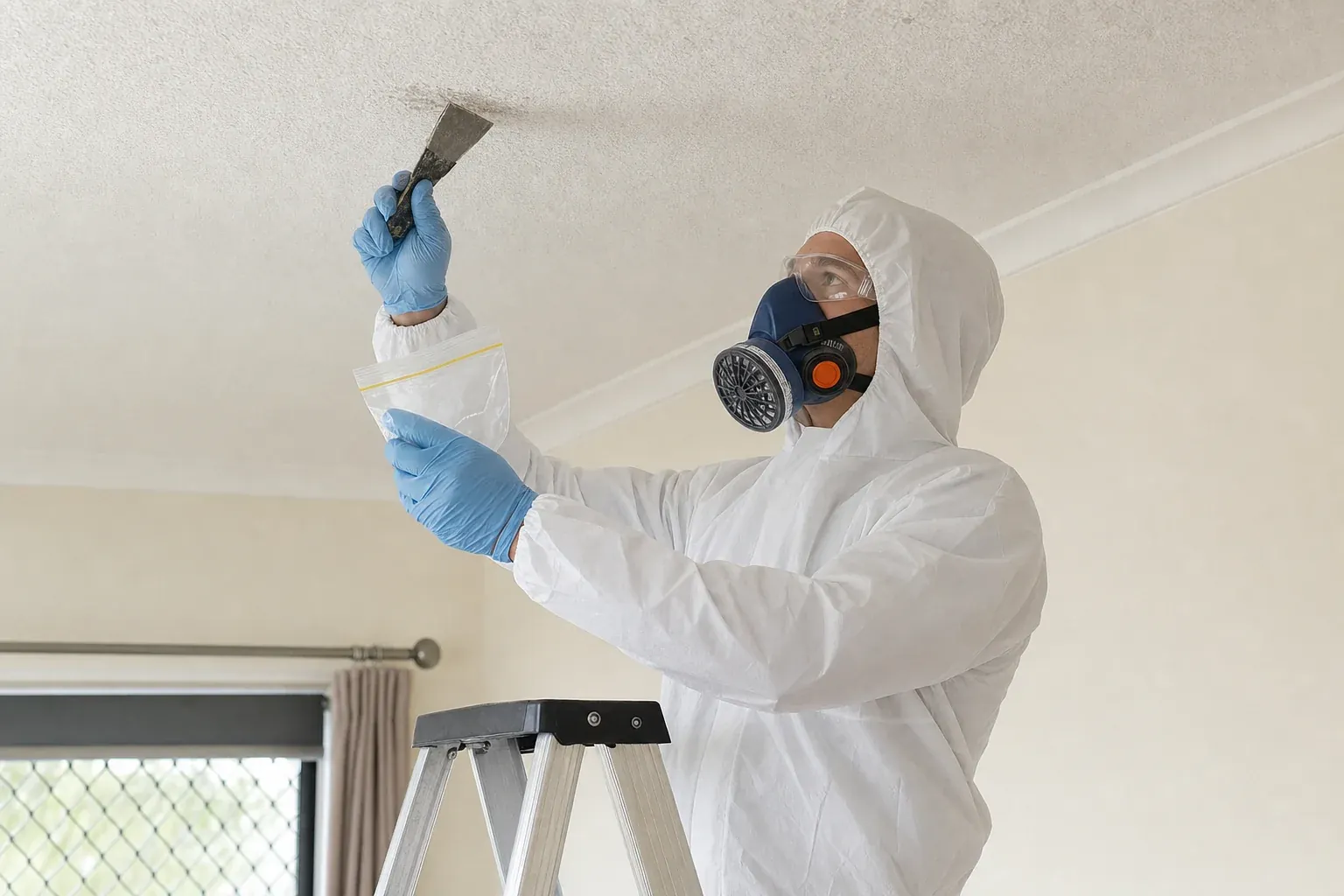
Testing a textured ceiling is a straightforward, controlled process. A WA Licensed Asbestos Assessor does the sampling so it is done safely and the result stands up.
- Step 01
Inspection
The assessor looks at the ceiling, its condition and the wider home to decide what needs sampling and where.
- Step 02
Controlled sampling
A small representative piece of the coating is taken with the area dampened to suppress dust, then sealed and labelled.
- Step 03
NATA accredited laboratory analysis
The sample goes to a NATA accredited laboratory, where it is examined under a microscope to identify any asbestos fibres.
- Step 04
Written result
You receive a clear written result stating whether asbestos was found, so you can plan your next step with confidence.
| Approach | What it actually tells you |
|---|---|
| Looking at it | Nothing definite. The fibres are invisible. |
| A home test kit | Not reliable for a bound coating like a ceiling. |
| A controlled NATA accredited laboratory sample | A clear yes or no from microscope analysis. |
If the result is positive
A positive result is not a reason to panic. An intact, painted textured ceiling that is left alone is generally stable and low risk.
It does mean you should plan any future work carefully. Removing or repairing an asbestos ceiling is a job for a licensed asbestos removalist, which is a separate service from our testing.
We test, we do not remove
Our role is to confirm what the material is and give you a clear written result. If the ceiling needs to come down, that work is carried out by a licensed asbestos removalist. After removal, we can carry out clearance so you know the area is safe.
Getting your ceiling tested
If you have a textured or popcorn ceiling in an older Perth home and any work is on the horizon, testing first is the sensible step. It is quick, controlled and gives you a definite answer.
Call (08) 6186 7484 to talk through your ceiling. We will explain what to sample and give you a written quote before any sample is taken.
Can I just paint over a textured ceiling instead of testing it?
Careful roller painting of an intact, sound ceiling generally does not disturb the coating, but sanding or scraping to prepare it can. If you plan any prep that breaks the surface, test first so you know what you are working with before you start.
Does the whole ceiling need to be sampled?
No. A small representative sample of the coating is enough for the NATA accredited laboratory to analyse. If different rooms have clearly different finishes, each distinct material may need its own sample.
Not sure about a material in your property?
A Licensed Assessor can take a sample and give you a documented answer.
Frequently asked questions
No. Whether a textured ceiling contains asbestos depends on the specific coating and when it was applied. Finishes applied before the 2003 national ban are more likely to be worth testing, but only a NATA accredited laboratory sample confirms it either way.
You cannot. Asbestos fibres are microscopic and invisible once bound into a coating, so age, colour and texture cannot confirm it. A controlled sample analysed at a NATA accredited laboratory is the only reliable method.
An intact, painted textured ceiling in good condition is generally stable, because the fibres stay locked in the coating. The risk arises when the surface is sanded, scraped, drilled or damaged, which is why you should test before any such work.
A WA Licensed Asbestos Assessor attends and takes the sample under proper control, dampening the area to suppress dust and sealing the sample for the NATA accredited laboratory. This keeps the process safe and the result reliable.
Related services
Written and reviewed by
Perth Asbestos Testing, Licensed Asbestos Assessor (WA)
This article is written and reviewed by a WA Licensed Asbestos Assessor who attends properties across Perth metro and regional WA in person. Information here is general guidance. For a definite answer about your property, the material needs to be sampled and tested.
(08) 6186 7484Topics covered