AI overview
Asbestos air monitoring draws a measured volume of air through a filter, then an independent laboratory counts the respirable fibres caught on it. It tells you what is in the air right now, which is a completely different question to whether a material contains asbestos. Bulk sampling identifies the material, air monitoring measures the airborne risk, and most jobs need one or the other rather than both.
Key takeaways
- Air monitoring measures fibres in the air, not what a material is made of.
- A bulk sample answers 'does this sheet contain asbestos', air monitoring does not.
- There are four types: background, control, clearance and exposure monitoring.
- Fibre counting under a microscope counts respirable fibres, not asbestos specifically.
- The national code of practice uses a control level of 0.01 fibres per millilitre.
- Friable removal work in WA requires monitoring by an independent Licensed Assessor.
- No air test can tell you whether you were exposed at some point in the past.
Most people ring us about a material. A sheet in the laundry, a textured ceiling, some eaves lining. That is a bulk sampling job.
Air monitoring is the other half of the picture, and it answers a genuinely different question. It does not tell you what your wall is made of. It tells you what is floating in the air you are breathing, at that place, at that time.
What air monitoring is
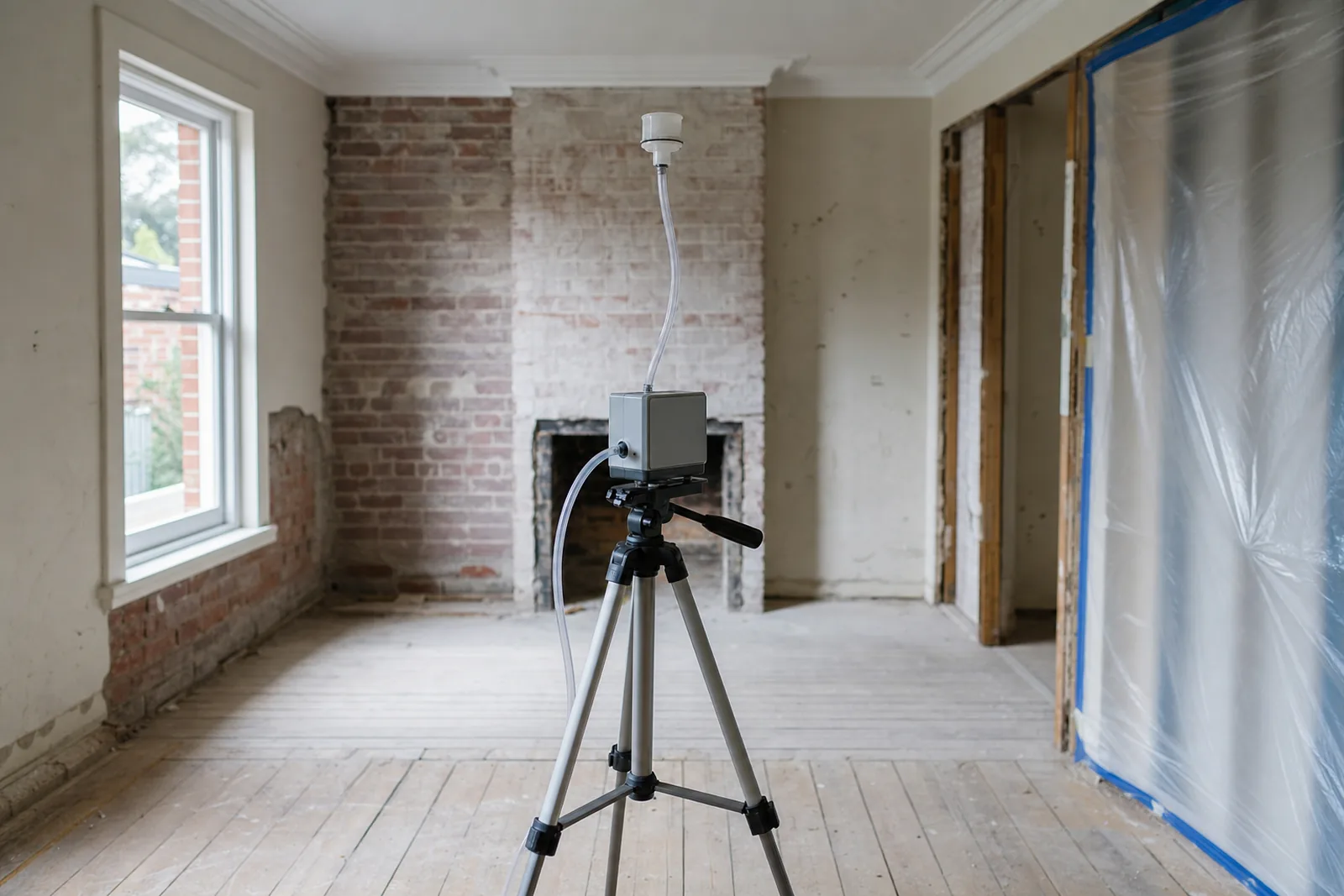
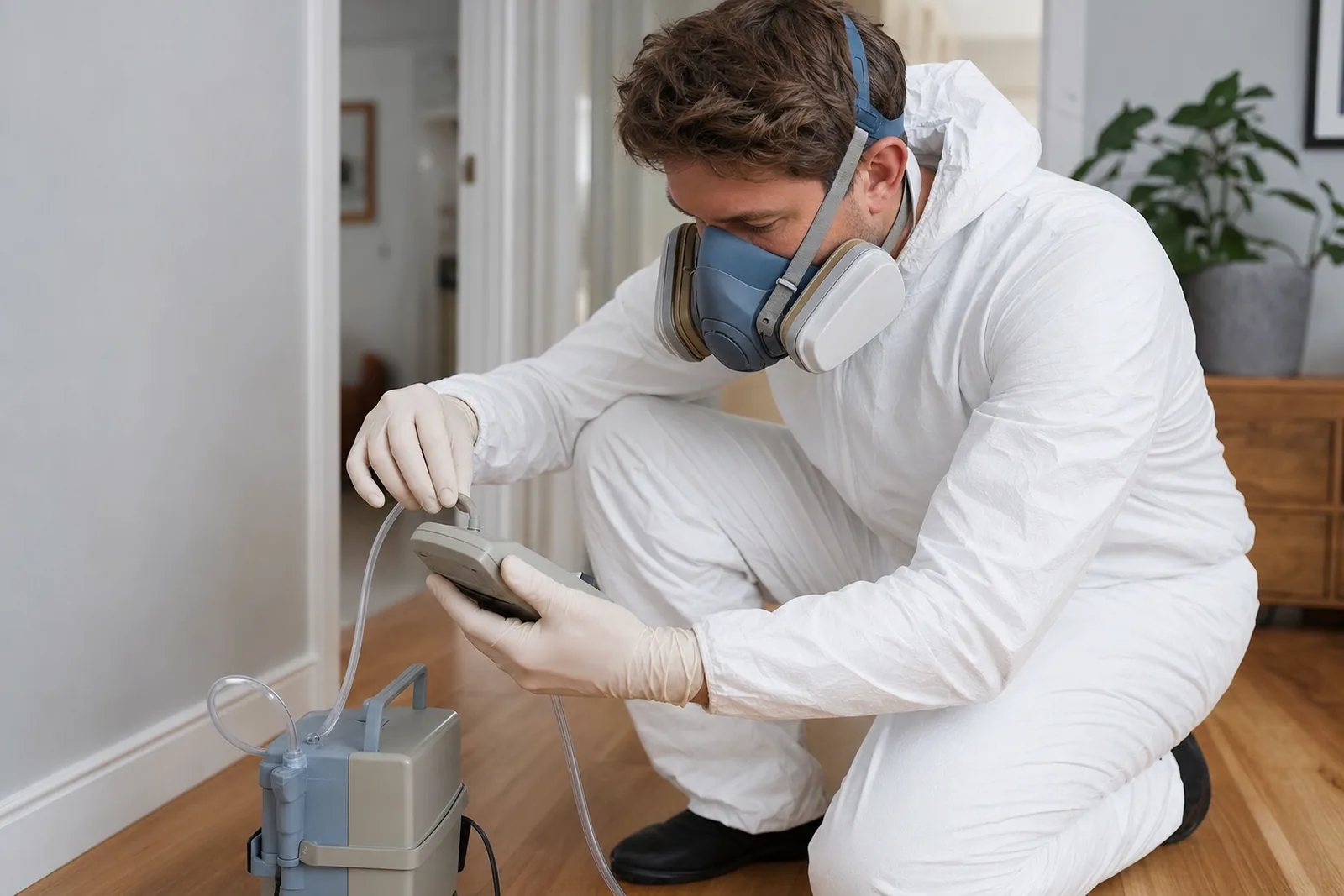
A small calibrated pump draws a known volume of air through a filter membrane over a set period. Anything airborne and small enough gets caught on that filter.
The filter then goes to an independent laboratory, where an analyst counts the respirable fibres on a measured portion of it under a phase contrast microscope. The count is converted back to a concentration, expressed as fibres per millilitre of air.
We monitor and assess, we do not remove
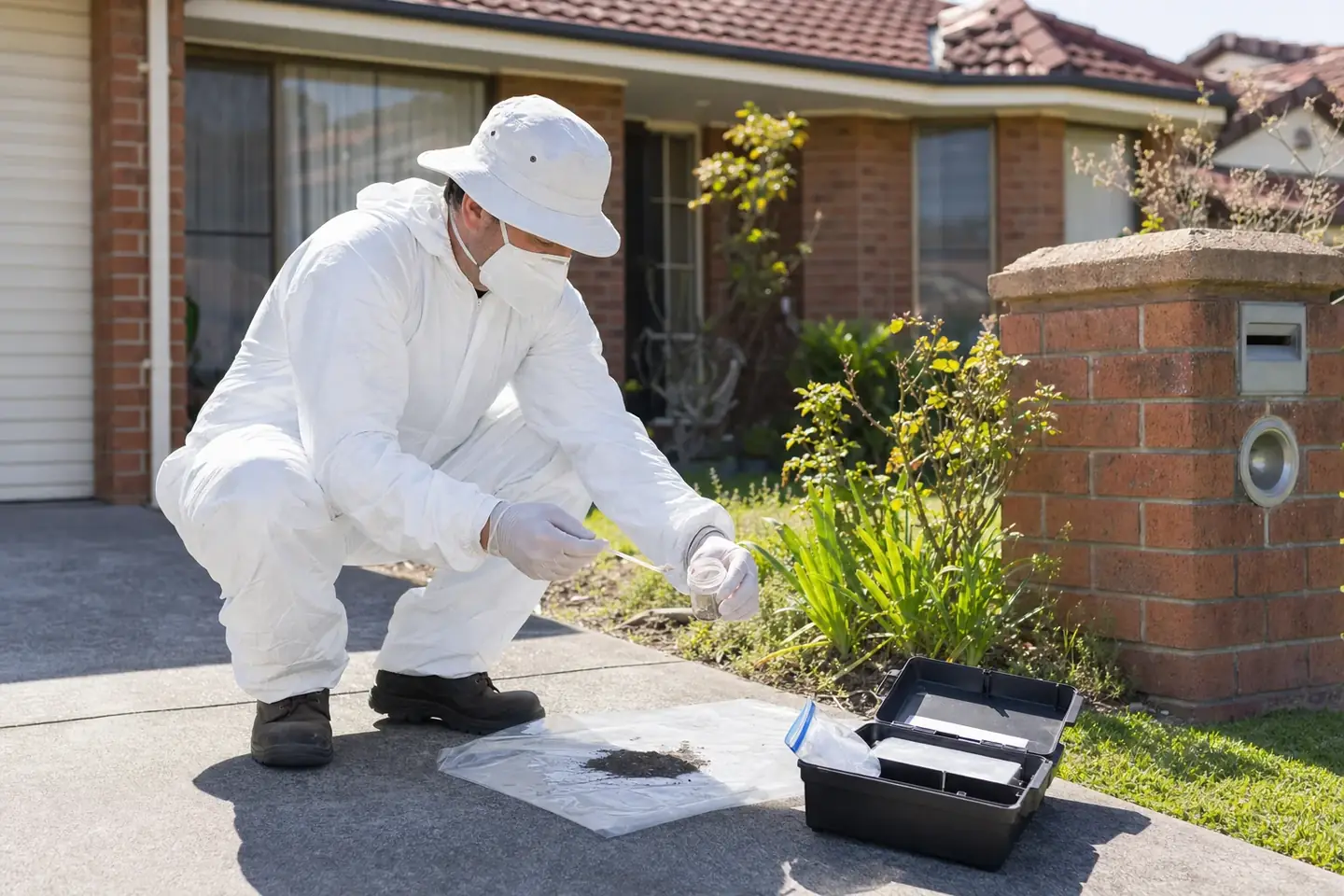
Perth Asbestos Testing is a Licensed Asbestos Assessor. We do the air monitoring, the inspection, the sampling and the clearance. Removal work itself is a separate job for a licensed asbestos removalist, and keeping those two roles apart is exactly what makes the monitoring meaningful.
Air monitoring vs bulk testing
These get confused constantly, and choosing the wrong one wastes money. The short version is that bulk sampling identifies a material and air monitoring measures the atmosphere.
| Bulk sampling | Air monitoring | |
|---|---|---|
| Question answered | Does this material contain asbestos? | What is airborne here right now? |
| What is collected | A small piece of the material itself | A measured volume of air through a filter |
| Laboratory method | Identification of the fibre type present | Counting respirable fibres on the filter |
| Typical trigger | Before drilling, cutting or renovating | During or after disturbance work |
| Result you get | Positive or negative for that material | A fibre concentration for that time and place |
A clean air result does not mean your walls are asbestos free. It means the air was clean while the pump was running.
That distinction matters more than it sounds. Undisturbed bonded asbestos sheeting in good condition releases very little into the air, so a property can return a perfectly normal air result and still be full of asbestos containing material.
The four types of air monitoring
Australian practice splits air monitoring into four jobs. They use the same pumps and the same laboratory method, but they exist for different reasons.
Background monitoring
Taken before any work starts, to establish what the air is like normally. Without a baseline you cannot say whether a later reading was caused by the work or was there all along.
Control monitoring
Run outside the work area while removal is under way. It is not there to check the air inside the enclosure. It is there to confirm that the controls are holding and nothing is escaping to the rest of the building.
Clearance monitoring
Done after removal work is finished, as part of deciding whether an area is safe to reoccupy. For friable work it sits alongside a visual inspection, and both have to be satisfactory before a clearance certificate is issued.
Exposure monitoring
A pump worn on the person, with the sampling head clipped in the breathing zone near the collar. This measures what one worker actually breathed across a shift, rather than what the room average was.
4
Types of air monitoring in Australian practice
0.01
Fibres per mL control level in the national code
Same day
Priority laboratory turnaround available
How a monitoring visit runs
- Step 01
Scope the monitoring
We work out which type you need, how many sampling positions, and where they go. Position choice is most of the job. A pump in the wrong spot produces a technically valid number that means nothing.
- Step 02
Calibrate and set up
Each pump is calibrated to a known flow rate before sampling begins, and the filter cassette is fitted with the cowl facing down so it collects air rather than settled dust.
- Step 03
Run the sample
The pump runs long enough to draw the volume of air the method requires. Short runs on a low volume push the detection limit up and make the result less useful.
- Step 04
Close out and check flow
Flow rate is checked again at the end. If it has drifted the sample is flagged, because the volume of air is what turns a fibre count into a concentration.
- Step 05
Laboratory analysis
Filters go to an independent laboratory under chain of custody and are counted under a phase contrast microscope. Field blanks go with them to catch contamination.
- Step 06
Written result
You get a report with the concentration at each position, the sampling times and volumes, and a plain statement of what the numbers mean for the decision you are making.
Reading the results
Two numbers come up repeatedly in Australian guidance, and it helps to know which is which.
- 0.01 fibres per millilitre is the control level in the national code of practice for asbestos removal. Readings at or above it are the trigger to stop, investigate and fix the controls.
- 0.1 fibres per millilitre is the workplace exposure standard for asbestos, averaged over an eight hour working day.
- Results are often reported as 'less than' a figure, because the method has a detection limit and a clean filter cannot return a true zero.
Fibre counting does not identify asbestos
Phase contrast microscopy counts respirable fibres of a certain shape and size. It cannot tell an asbestos fibre from a fibreglass or cellulose one. That is a deliberate, conservative feature of the method, and it is also why an air result alone never confirms that a material contains asbestos.

Can it tell me if I was exposed?
This is the most common reason people search for air testing, and the honest answer is no.
Air monitoring measures a place, not a person, and only while the pump is running. If you drilled into a sheet last month, monitoring your lounge room today tells you nothing about that moment. The fibres released then have long since settled or dispersed.
There is also no test we can offer that reads a past exposure out of someone. If you are worried about your health after disturbing a material, that is a conversation for your GP, and it is worth having. What we can do is test the material so you know what you were dealing with.
When you actually need it
Air monitoring is genuinely necessary in a smaller set of situations than people expect. It earns its place when a material is being disturbed, or has been.
- 1Friable asbestos removal work, where monitoring by an independent Licensed Asbestos Assessor is required rather than optional.
- 2Clearance after removal, where a reading supports the decision to let people back into the area.
- 3Occupied buildings next to removal work, such as a school, a strata block or a tenanted office, where neighbours need assurance the controls are holding.
- 4After an uncontrolled disturbance, like a fire, storm damage or a trade cutting into something they should not have.
- 5Disputes and due diligence, where an independent set of numbers settles an argument that opinions will not.
If none of those describe your situation and you simply want to know whether a material contains asbestos, you want bulk sampling instead. It is the cheaper and more direct answer, and we will tell you so rather than sell you monitoring you do not need.
Perth housing stock and the 2003 ban
Asbestos was banned nationally in Australia at the end of 2003, and a great deal of Perth housing predates that. Age alone is a reason to test a material before you disturb it, but it is not a reason to book air monitoring on an undisturbed home.
Call (08) 6186 7484 and tell us what is happening at the property. We will tell you which test fits and give you a written quote before anything is booked.
How long does an air sample need to run?
Long enough to draw the volume of air the method requires, which usually means a run measured in hours rather than minutes. Cutting it short raises the detection limit, so the laboratory can only report a higher 'less than' figure and the result becomes less useful.
Can I hire a pump and do it myself?
The equipment is only part of it. Position selection, calibration, run volume, field blanks and chain of custody are what make a result defensible, and for friable removal work the monitoring has to be done by an independent Licensed Asbestos Assessor to count at all.
Not sure about a material in your property?
A Licensed Assessor can take a sample and give you a documented answer.
Frequently asked questions
It is a test that draws a measured volume of air through a filter, which an independent laboratory then examines to count the respirable fibres collected on it. The count is converted to a concentration in fibres per millilitre, giving you a measurement of what was airborne at that place while the pump was running.
No, and they are not interchangeable. Bulk sampling takes a piece of the material and identifies whether it contains asbestos, while air monitoring measures airborne fibres and cannot tell you what your walls or ceilings are made of.
No. Air monitoring measures a location during the sampling period, not a person, and it cannot look backwards at a disturbance that has already happened. If you are concerned about your health after disturbing a material, speak to your GP, and have the material itself tested so you know what it was.
Friable asbestos removal work requires air monitoring carried out by an independent Licensed Asbestos Assessor, separate from the removalist doing the work. It is also standard practice for clearance after removal and where occupied areas sit alongside a removal job.
Related services
Written and reviewed by
Perth Asbestos Testing, Licensed Asbestos Assessor (WA)
This article is written and reviewed by a WA Licensed Asbestos Assessor who attends properties across Perth metro and regional WA in person. Information here is general guidance. For a definite answer about your property, the material needs to be sampled and tested.
(08) 6186 7484Topics covered