
Soil & land testing
Soil & Land Asbestos Testing in Perth
Soil and land sampling to check fill and ground for asbestos before you build, subdivide or landscape, so contamination does not stop your project later.
(08) 6186 7484Book this test
Tell us about the property. A Licensed Assessor calls you back, same-day available.
The short version
Checking the ground, not just the building
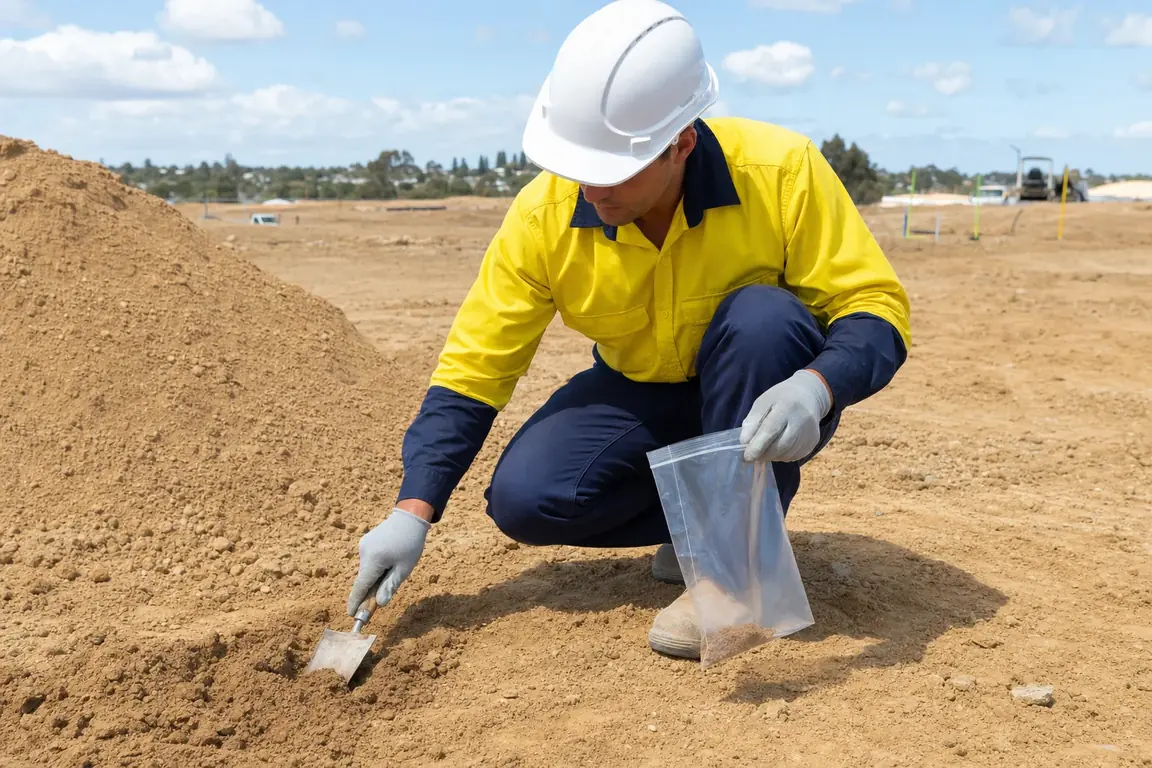
Asbestos does not only turn up inside buildings. It can be present in imported fill brought onto a site from an unverified or historical source, in buried building debris that was pushed into the ground when older structures were demolished without proper disposal, and in demolition rubble that was worked into the soil years or decades ago when regulatory requirements were far less stringent than they are today.
Soil testing samples the ground at agreed locations and depths so you have a confirmed answer about whether asbestos is present before you disturb it…
“The only way to know for sure is to test.”
At a glance
Who attends
Licensed Asbestos Assessor (WA)
How it's analysed
NATA accredited laboratory
What you get
A clear written report
Turnaround
Same-day available on request
What you get
What is included

Representative ground and fill sampling
Soil samples are taken at agreed locations and depths across the area of interest to provide a representative picture of what is…

NATA accredited laboratory analysis
Samples are analysed at a NATA accredited laboratory to confirm whether asbestos is present, in what form it occurs, and at which…

Written results report
You receive a clear written report documenting the sampling locations, depths, NATA accredited laboratory results and what the…

Guidance on next steps
If asbestos is found in the soil, we explain what the finding means for your project and what remediation or management options…

Chain-of-custody documentation
Each sample is sealed, labelled and tracked under chain of custody from the ground through to the NATA accredited laboratory…
Suitable for approvals and transactions
The written report is structured for use in development applications, land transactions, principal contractor requirements and…

Perth metro and regional WA coverage
We conduct soil and land testing across the Perth metropolitan area and regional WA, including rural and agricultural land…
In your report, you receive
- A written report documenting every sampling location, depth and NATA accredited laboratory result
- Confirmation of whether asbestos was detected and in what form at each sampled location across the site
- Photographs of sampling locations on site for spatial reference and documentation
- Chain-of-custody records linking each sample from the ground to the NATA accredited laboratory analysis
- Plain-English guidance on what the results mean for your planned project and what steps are needed next
- A report formatted for development applications, land transactions, principal contractor requirements and council…
- Spatial context for each result showing exactly where on the site each sample was taken relative to the property…
- Written guidance on what the results mean for your specific project timeline and what next steps are available if…
What we look at
Sites and situations where soil testing is commonly needed
Tap any material to see where it turns up and what to watch for. If you are unsure what you are looking at, that is exactly what a sample confirms.
Sampled in personMany Perth residential lots have had fill brought in at some point, sometimes from demolished house sites or commercial demolition projects where the origin and composition of the fill was not documented at the time. Imported fill from those types of sources is one of the most common pathways through which asbestos fragments end up in residential soil across the Perth metropolitan area, and the contamination remains in the ground until it is tested and identified.
Land with a history of industrial or commercial use can contain buried building materials, including asbestos from structures that were demolished in place and the rubble pushed into the ground or used as fill rather than being properly removed and disposed of. This is a consistent finding on brownfield redevelopment sites and former factory, depot or service station land across Perth and regional WA.
Testing before a subdivision is formally registered and individual lots are created confirms that the land is free of contamination before parcels are offered to buyers who expect to receive clean and unencumbered land. A contamination finding after lots are registered and sold creates a complex, costly and time-consuming remediation, disclosure and liability problem for the developer.
Farm sheds, implement stores and other rural outbuildings were frequently constructed from corrugated asbestos cement sheeting across WA during the mid-twentieth century. On many rural properties, these structures were demolished in place when they reached the end of their life, with material buried in the surrounding area or scattered across the paddock rather than being formally removed. This contamination often remains undiscovered for decades until the land changes use.
Where a neighbouring property or adjacent block has had older buildings demolished in the past, asbestos fragments can migrate into adjacent soil through fill redistribution, stormwater movement and physical proximity over time. Testing the area near the boundary confirms whether that migration has occurred and to what extent the adjacent property has been affected by the historic demolition activity.
Significant landscaping projects, cut-and-fill earthworks and retaining wall construction disturb soil to considerable depth and move it across large areas of the site. Where there is any reasonable possibility that the ground may contain asbestos from prior use or fill, testing before the earthworks programme begins is a straightforward and cost-effective step compared with encountering a contamination discovery mid-project.
Properties located adjacent to or downstream of historical waste disposal sites, tips or dumps that accepted demolition and construction waste before proper disposal regulations were in place may have been affected by asbestos-containing fragments carried by stormwater, fill redistribution or general site activity from the disposal area into the surrounding land.
Simple process
How it works
Tell us about the site and the planned works
Call (08) 6186 7484 or book online. Describe the land, its known or possible history, the extent of the area you want tested, and what you are…
Licensed Assessor attends and takes soil samples
A Licensed Assessor marks and photographs each sampling location, takes soil samples at the agreed depths using appropriate equipment, and notes any…
Samples are sealed and dispatched to the NATA accredited laboratory
Each sample is sealed, assigned a chain-of-custody reference, and dispatched to the NATA accredited laboratory for analysis.
Written report and guidance are delivered
The written report is delivered with sampling locations documented, NATA accredited laboratory results presented clearly, and plain-English guidance…
We discuss next steps if contamination is found
If the test results confirm asbestos is present in the soil, we contact you directly to explain the findings in detail and advise on the remediation…

In person
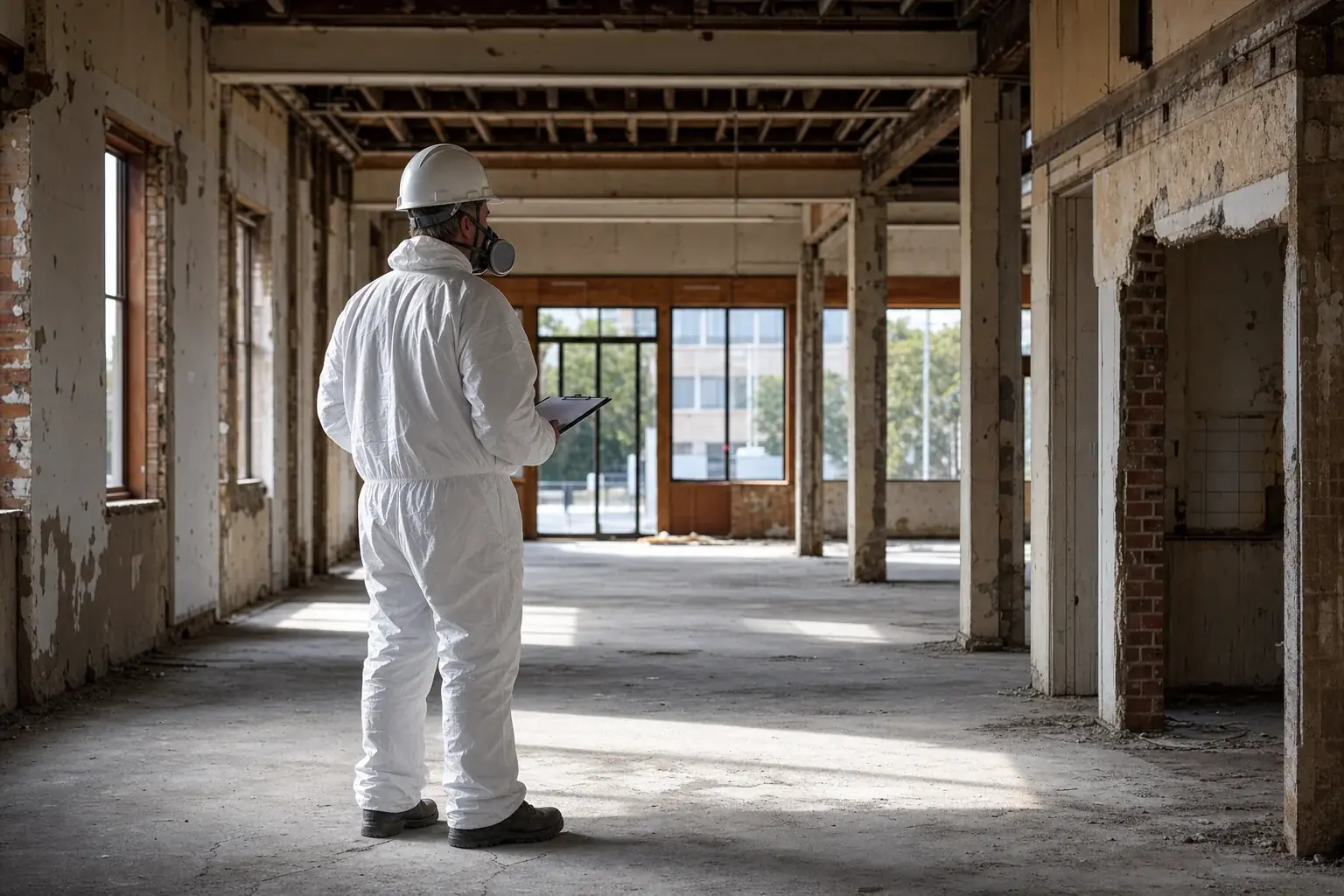
Every sample taken by a licensed assessor
NATA accredited laboratory analysed
NATA accredited laboratory result
Documented
Chain of custody, start to finish

Same-day
Rush results available on request
Common situations
When to test the ground
- 01
Before breaking ground on a new build
Confirming the ground is clean before any earthworks or footings begin is the practical and cost-effective approach.
- 02
Before subdividing or developing land
Testing before lots are created and formally registered confirms that the land is free of contamination before individual buyers receive their parcels…
- 03
Before landscaping and earthworks
Significant earthworks and landscaping disturb soil to depth and move it across the site.
- 04
Due diligence before a land purchase
Buyers of older residential lots, rural properties and former commercial or industrial land can confirm the ground is clean before the transaction…
- 05
After uncovering suspect material during works
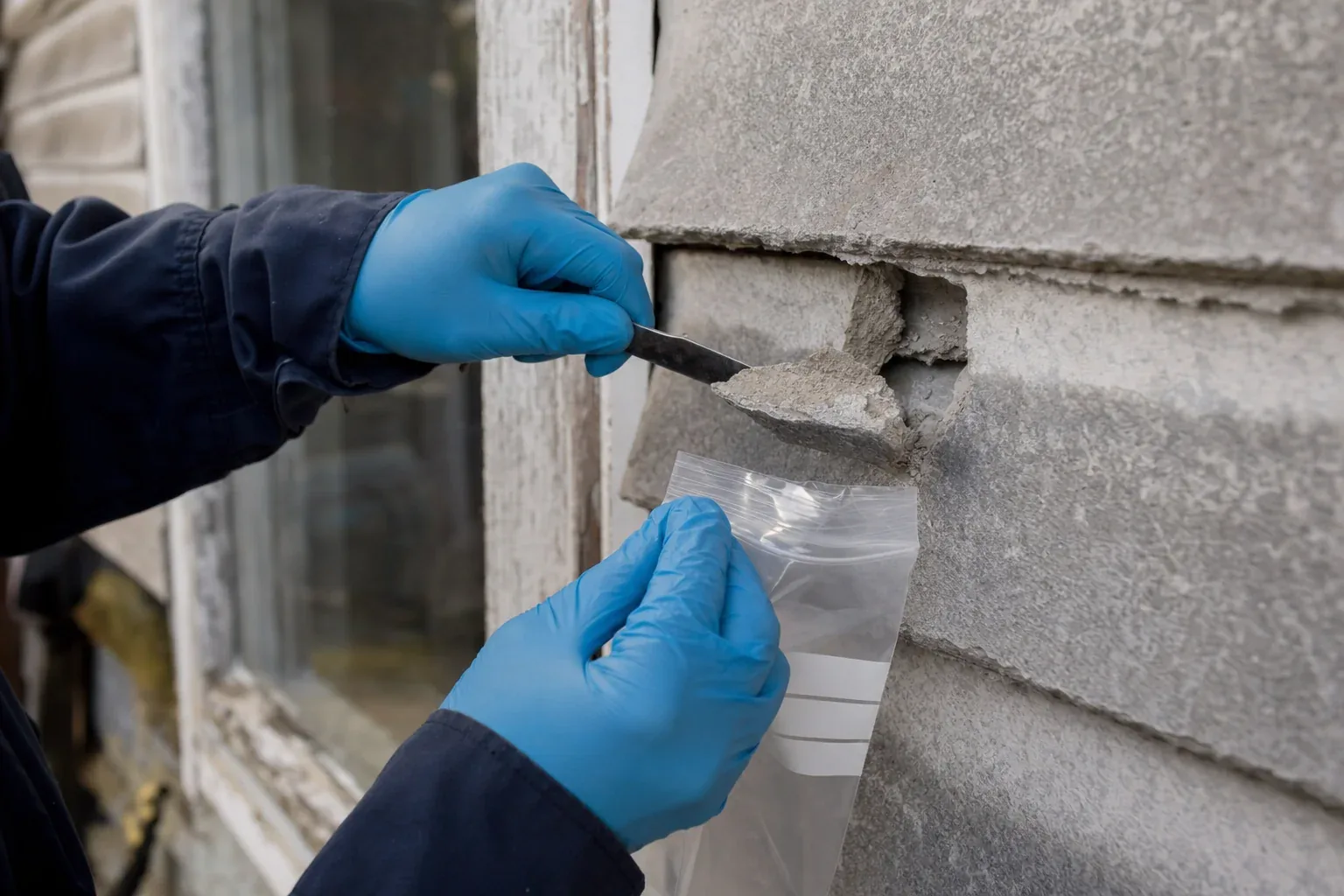
If buried sheeting fragments, corrugated material or any other suspect material is encountered during excavation or earthworks, work should stop and…
- 06
Before applying for development approval on land with a demolition history
Many WA local councils and the state planning authorities require evidence that a site with a demolition or industrial history has been assessed for…
- 07
When council or EPA requires contamination assessment
Local councils and the WA Environmental Protection Authority may require a contamination assessment as a condition attached to a subdivision or…
Common questions
The most common routes are imported fill brought onto the site from demolished buildings or unverified sources, building debris buried in place when older structures were knocked down without proper removal and disposal, and asbestos materials that gradually degraded into fragments and worked their way into the surrounding ground over many years of weathering and physical disturbance.
Before you disturb the ground. Testing ahead of earthworks, landscaping or construction gives you the confirmed information before it is needed, rather than encountering a contamination problem after the works have already started and the response options are fewer and more expensive to manage.
The number of sampling locations depends on the size of the area, the history of the site and the nature of the concern. We confirm an appropriate sampling plan when you describe the site. More sampling locations provide a more complete picture of conditions across the full area being investigated.
We explain clearly what was found at which locations, what form the asbestos took in the soil, and what the finding means for your project. Remediation of contaminated soil, where required, must be carried out by appropriately licensed contractors. We advise on the available options and what the remediation process typically involves.
Yes. The written report documents the sampling methodology, location plan, sampling depths, NATA accredited laboratory results and conclusions in a format suitable for a development application or for satisfying a specific condition imposed by a local council or state planning authority.
There is no universal legal requirement to test soil before every land sale, but the vendor's obligation to disclose known contamination under property law applies, and a vendor who knows or reasonably suspects asbestos may be present in the soil has a disclosure obligation in most WA property transactions. Testing before sale removes the uncertainty for both vendor and purchaser, and a clean result is a straightforward point of disclosure. A contamination finding that is discovered by the purchaser after settlement is typically far more costly and complicated to resolve than one that is properly disclosed and managed before the transaction completes.
Related services
You might also need
Asbestos Sampling & NATA Accredited Laboratory Testing
Properly documented bulk samples taken by a Licensed Assessor and analysed at a NATA accredited laboratory.
Learn moreHazardous Materials Surveys
Full hazardous materials surveys for demolition, refurbishment and due-diligence on commercial sites.
Learn moreAsbestos Inspections & Surveys
Residential and commercial inspections that identify and document suspected asbestos-containing materials.
Learn more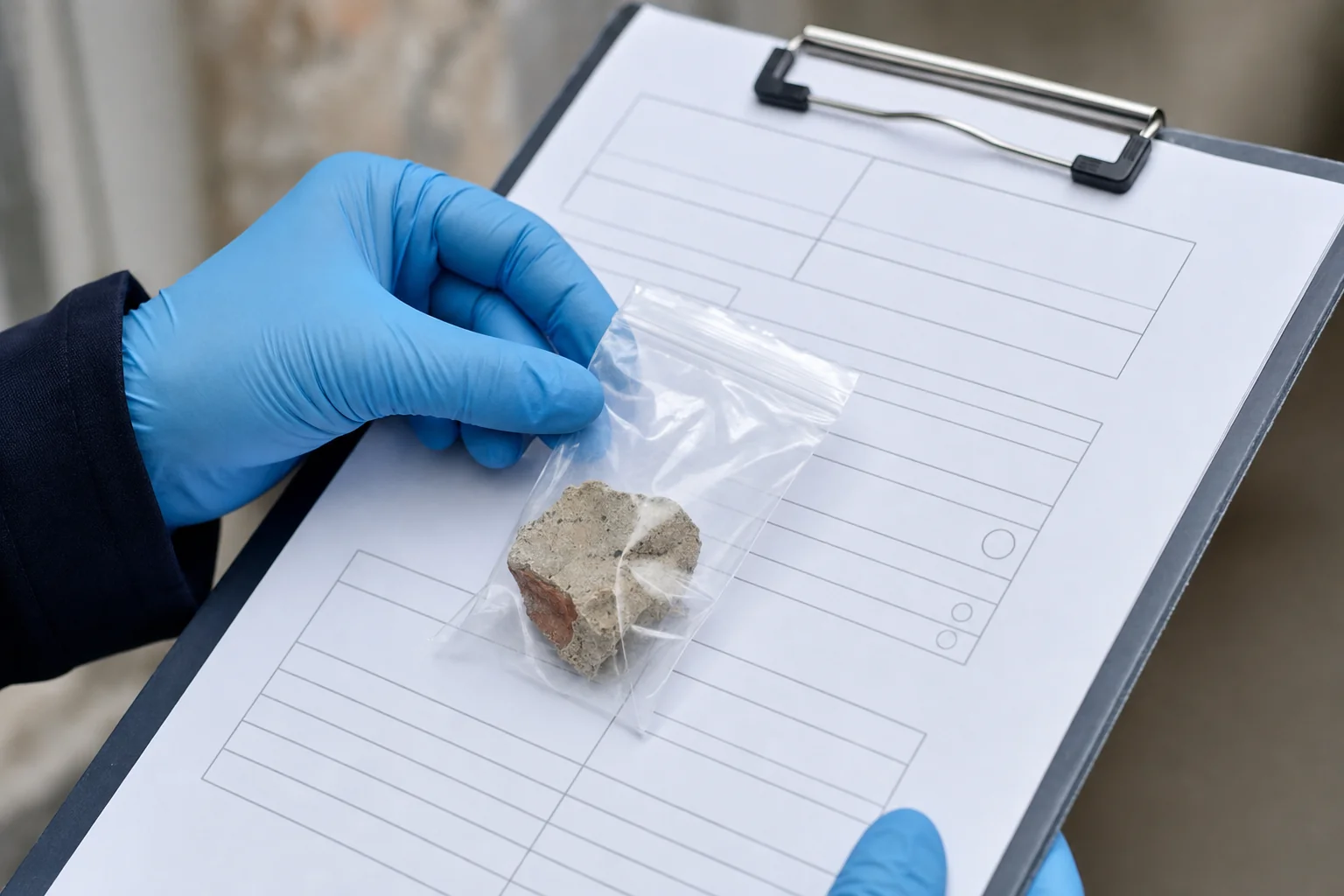
Book soil & land asbestos testing
Not sure what you're
looking at?
Don't guess. Book a test with Perth's Licensed Asbestos Assessor and get a written answer you can act on.
(08) 6186 7484Request a test or a quote
Tell us about the property and we will get straight back to you.